
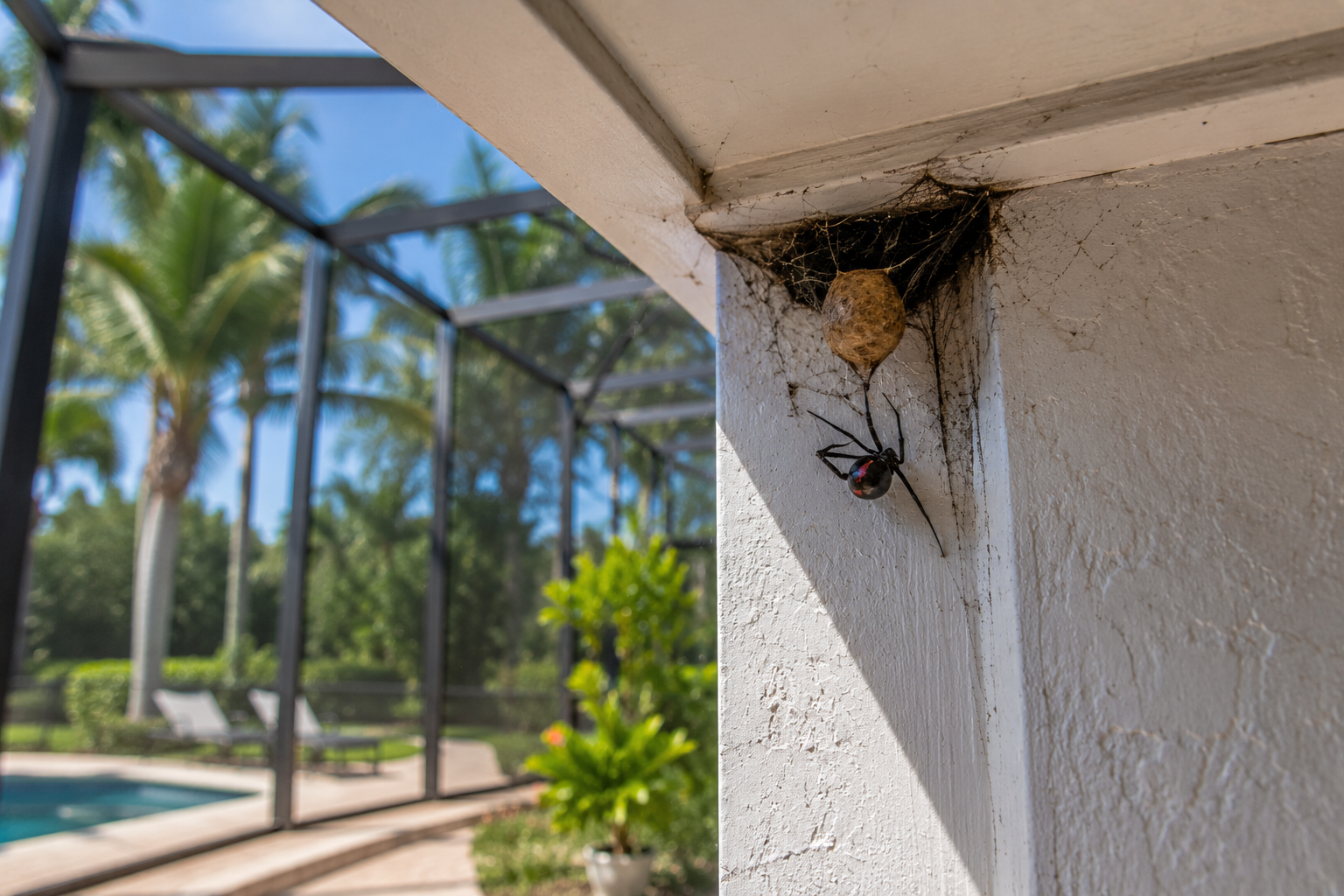
Professional spider control in Cape Coral is a four-step process: inspection of the lanai, pool cage, and home exterior; removal of existing webs and egg sacs; targeted treatment of screens, supports, and corner anchor points; and ongoing service to break the rebuilding cycle.
That structure matters because Cape Coral lanais are essentially designed to support spiders. Sweeping clears the symptom. Treatment addresses the cause.
If you are done with the weekend sweeping routine, this guide covers what to expect from a real Cape Coral pest control treatment plan, how to evaluate providers, and why ongoing protection is the only solution that actually keeps a lanai usable.
When Is It Time to Call a Professional for Lanai Spiders in Cape Coral
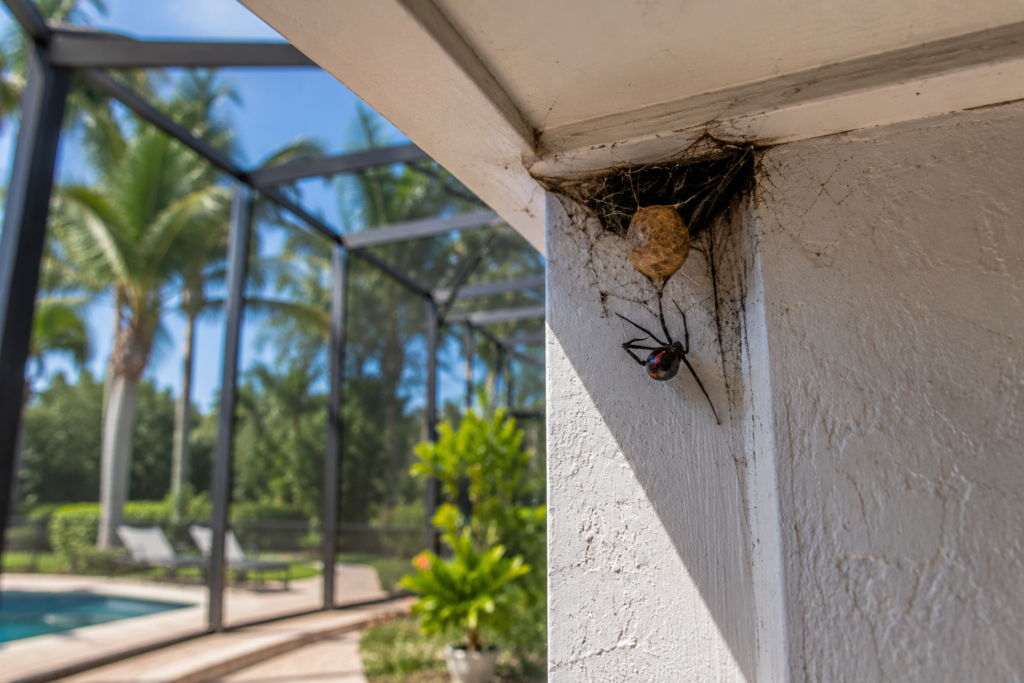
Three situations consistently signal that DIY has reached its limit: web rebuilding within days of clearing, accumulating egg sacs you cannot keep up with, or any sign of a black widow or brown widow on the property.
Webs Return Within Days No Matter How Often You Sweep
A spider can rebuild a web overnight. If you are clearing webs every weekend and finding new ones by midweek, the conditions that drew the spiders in the first place are still in place.
Sweeping does nothing to the eggs, the residual food supply, or the lighting that draws insects. Each cycle restarts the same problem.
Egg Sacs Keep Appearing in Lanai Corners and Pool Cage Supports
Egg sacs are the strongest signal that a population has settled in. A single sac can hatch dozens of spiderlings, and one cleaning round will not address them.
If you are finding sacs in lanai corners, frame bends, or under furniture each time you clean, the population is reproducing faster than you can keep up with it.
Suspected Black Widows or Brown Widows Around the Home
If you have spotted any spider with a red or orange hourglass marking, treat it as an escalation. Widow species are not aggressive, but they are medically significant.
Widows tend to nest in dark, undisturbed areas: garages, sheds, under patio furniture, and in pool equipment housings. Professional inspections find locations that DIY checks miss.
What a Professional Spider Treatment Plan Should Include in Cape Coral
A complete plan covers four areas: a thorough inspection of the lanai and exterior, removal of existing webs and egg sacs, targeted treatment of surfaces and corners where spiders rebuild, and recommendations for outdoor lighting and other conditions that encourage spiders.
If a proposal skips any of these, expect the problem to come back.
Inspection of Lanai, Pool Cage, and Home Exterior
The technician should walk the entire lanai, pool cage, and exterior before doing anything else. The goal is to identify which species are present, where webs and egg sacs are concentrated, and what conditions are sustaining them.
Without this step, treatment is guesswork.
Removal of Existing Webs and Egg Sacs
Web and egg sac removal should be the first physical step of the treatment, not an afterthought. Leaving egg sacs in place means new spiderlings will hatch into a treated environment, which still produces a population rebound.
Good providers physically remove webs and sacs from screens, frames, corners, and undersides of furniture before applying any product.
Targeted Treatment of Screens, Supports, and Corner Anchor Points
Spiders rebuild in the same productive locations: screen edges, frame corners, support beams, and anywhere airflow is calm. Treatment focuses residual product on these surfaces, not just open spraying of the lanai.
Most professional-grade products used for lanai spider control are formulated to be safe for households with pets and children once dry. Confirm this with your provider before treatment.
Addressing Outdoor Lighting and Conducive Conditions
Lanai lights pull insects, and insects feed spiders. A good plan recommends switching to yellow bug-rated bulbs or warm LEDs, using motion-activated outdoor lighting, and clearing clutter that creates harborage.
These changes do not eliminate spiders, but they significantly reduce the rate at which new ones appear between treatments.
Schedule My Cape Coral Spider Service Now
How Professional Lanai and Pool Cage Treatments Work
Professional treatments work by combining physical removal with residual products that prevent rebuilding for weeks. The UF/IFAS guidance on lanai spider management outlines the same general approach: inspect, remove, treat, and modify conditions.
Web Removal as the First Step, Not the Last
Removing existing webs and egg sacs is the foundation of any effective treatment. Skipping this step leaves visible activity in place and allows the next generation to hatch into the home.
Physical removal also lets the technician treat surfaces that are otherwise covered.
Residual Products That Prevent Rebuilding for Weeks
After removal, residual products are applied to the surfaces where spiders typically rebuild. These products remain effective for several weeks, treating new spiders that arrive on those surfaces before they can establish webs.
This is the step that breaks the rebuilding cycle. DIY foggers and contact sprays do not provide this kind of lasting coverage.
Why the Right Approach Depends on the Species and Layout
Orb weavers in an open pool cage call for different treatment than widow spiders in a cluttered garage. Lanai layout, screen condition, and the presence of pets or pool equipment all affect product choice and application.
This is why a one-size-fits-all approach rarely works in Cape Coral homes.
What Results to Expect and How Quickly Treatment Works
Most homeowners see a noticeable reduction in visible spiders and webs within 1 to 2 weeks of the first treatment. Full long-term control requires follow-up visits to break the rebuilding cycle.
Visible Reduction Within the First Treatment Cycle
After the initial visit, the lanai should look noticeably cleaner within a week. Existing spiders have been removed or contacted with residual product, and the population begins to drop.
Be cautious of any provider who promises permanent elimination after one visit. Cape Coral’s year-round spider pressure makes that promise unrealistic.
Why Follow-Up Visits Matter for Long-Term Lanai Control
Egg sacs that were missed, new spiderlings dispersing from neighboring properties, and insect populations that continue to draw spiders all keep pressure on the home between visits.
Scheduled follow-up visits maintain the residual barrier and address activity before it rebuilds. This is what separates a temporary cleanup from sustained control.
How to Evaluate a Spider Control Provider Before Hiring
The best way to evaluate a provider is to ask specific questions during the estimate. The EPA guide to choosing a pest control company recommends verifying licensing and requesting written treatment details before signing.
Questions to Ask During the Estimate
1. Will you inspect the entire lanai, pool cage, garage, and exterior, or just the lanai?
2. Do you remove existing webs and egg sacs as part of the service, or is that on me?
3. What products do you use on lanai screens and supports, and are they safe for my pets and family once dry?
4. How long should I expect the residual treatment to remain effective?
5. Does the plan include follow-up visits, and how often?
6. If webs return between visits, what is your callback policy?
7. Are you licensed under the Florida Structural Pest Control Act, Chapter 482, and can you provide your license information?
A provider who hesitates on licensing, callback policy, or product safety is not the right fit.
What a Good Lanai Treatment Proposal Should Include
A written proposal should specify the inspection scope, web and egg sac removal scope, products used, areas treated, number of visits included, total cost, satisfaction guarantee, and the terms of any ongoing service agreement.
If any of these are vague or missing, ask for clarification before signing.
Schedule My Cape Coral Spider Service Now
Why Ongoing Protection Is the Only Long-Term Solution in Cape Coral
One-time treatments work for a few weeks. Then the lanai lights resume drawing insects, new spiders arrive, and the rebuilding cycle restarts.
In Cape Coral’s year-round spider environment, recurring service is the only approach that keeps a lanai consistently usable.
Year-Round Climate Means Year-Round Web Pressure
Cape Coral does not have a winter that slows spider populations. New spiderlings hatch and disperse every month.
This is why one-time service rarely produces lasting results. The conditions that brought spiders in the first place do not change.
What a Recurring Pest Control Plan Covers for Lanais and Pool Cages
Most recurring plans include scheduled visits, typically quarterly or bimonthly, that address spiders alongside other common pests like ants and roaches.
Paske Pest Control offers recurring pest control plans in Cape Coral that include lanai spider treatments under a single service agreement.
Recurring plans usually include free reservices between visits if activity returns.
How Ongoing Service Prevents the Web-Rebuilding Cycle
Each visit refreshes the residual product on screens and supports, removes any new webs and egg sacs, and addresses activity that has appeared since the last service.
This consistency is what breaks the rebuilding cycle. Spiders that arrive on treated surfaces do not establish webs, and the population stays at a level that does not interfere with the use of the lanai.
Schedule My Cape Coral Spider Service Now
How to Get Started With Spider Control in Cape Coral
Start by scheduling an inspection with a licensed provider who will walk the entire lanai, pool cage, and exterior before recommending treatment. Ask the questions listed above.
Compare at least two proposals. Make sure the plan includes web and egg sac removal, residual treatment of corners and anchor points, and a clear follow-up schedule.
Paske Pest Control provides spider control in Cape Coral with lanai-focused treatment plans, recurring service options, and pet-safe and family-safe product applications.
The longer the rebuilding cycle continues, the harder it becomes to break. Professional treatment paired with ongoing protection is the most practical way to keep a Cape Coral lanai consistently usable.
FAQs
How often should lanai spider treatment be applied in Cape Coral?
Most homeowners benefit from quarterly or bimonthly service. Cape Coral’s year-round spider activity means residual products need refreshing every 1 to 3 months to stay ahead of new spiders dispersing onto the property.
One-time treatments produce results for a few weeks, but the rebuilding cycle resumes once the residual fades.
Are professional lanai spider treatments safe for pets and children?
Most professional-grade products used on lanai screens and supports are formulated to be low-toxicity and safe once the application has dried.
Ask your provider about specific products, drying times, and any precautions for the day of treatment. A reputable company will answer these questions clearly.
Will professional treatment eliminate every spider on my lanai?
No. The goal is consistent reduction, not total elimination. Cape Coral’s climate keeps new spiders arriving year-round, and many of them are beneficial pest predators.
Professional treatment keeps populations at a level that does not interfere with using the lanai, addresses any medically significant species like widows, and breaks the rebuilding cycle that DIY methods cannot.