
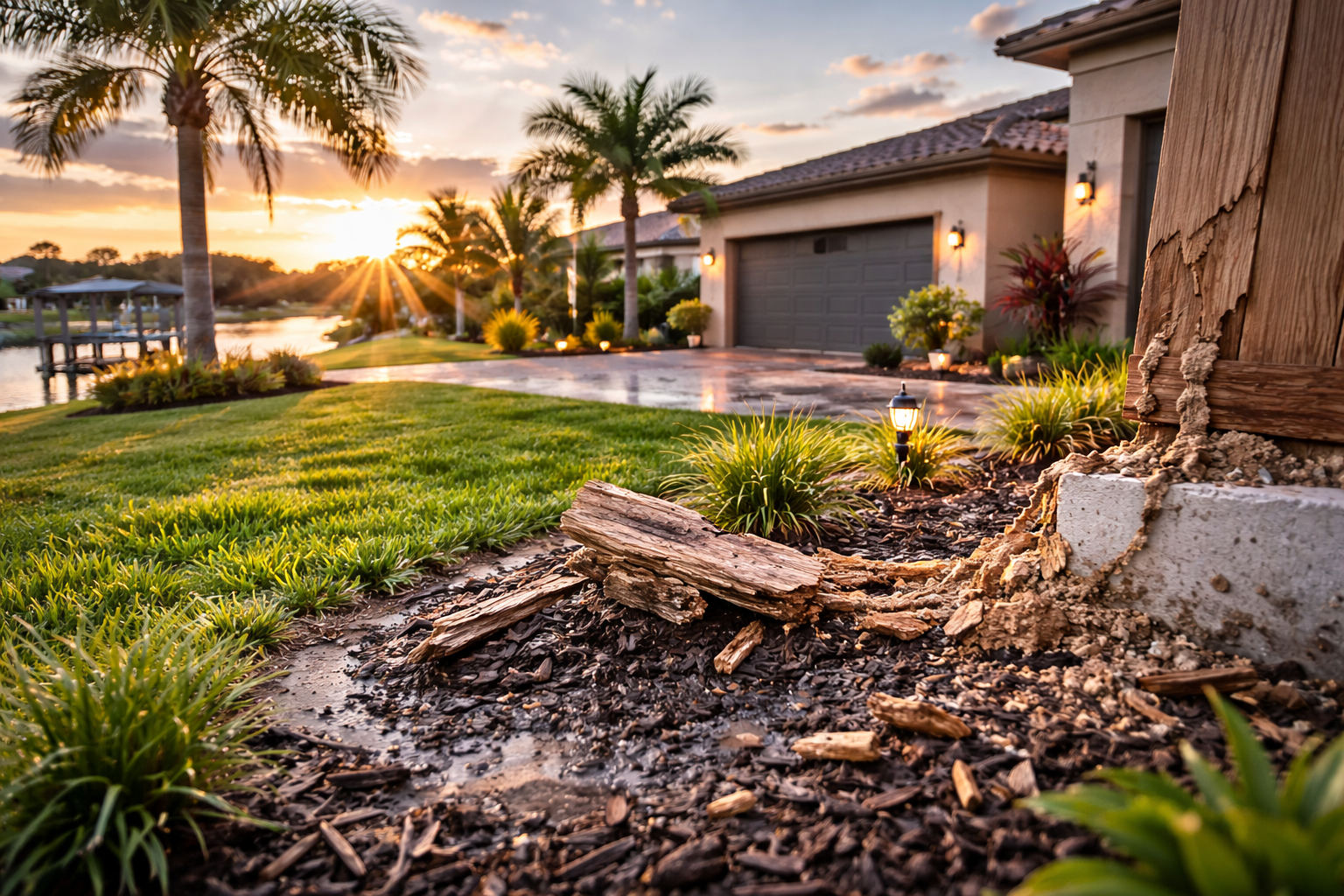
You know you have a termite problem in your Cape Coral home or business, or a recent inspection confirmed activity. Now you need to decide who to hire, what treatment makes sense for your situation, and whether ongoing protection is worth the investment.
Those are the right questions. The answers depend on the species involved, the severity of the damage, and the specific conditions on your property.
This article covers when professional treatment is necessary, what a good inspection and treatment plan should include, how to compare treatment approaches, and how to choose ongoing protection that prevents expensive repairs later.
If you need to revisit how to evaluate what you have found, see our guide on evaluating termite signs in Cape Coral.
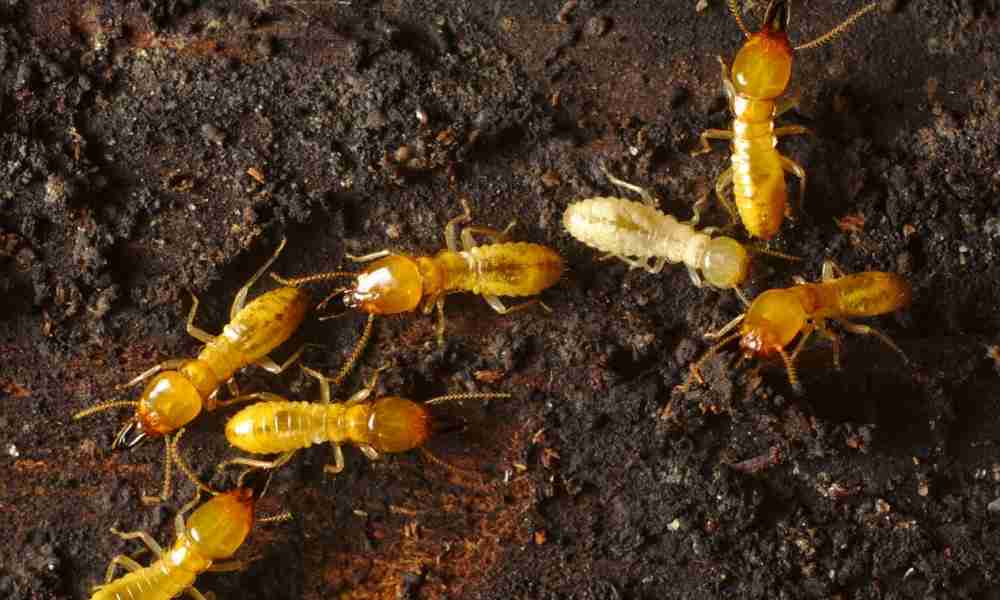
When Does a Termite Problem in Cape Coral Require Professional Treatment
Signs That DIY Methods Will Not Solve the Problem
Over-the-counter sprays and retail bait traps are designed for surface-level pest issues. They do not reach subterranean colonies living underground or drywood colonies established inside wall framing.
If you have found mud tubes, active swarmers emerging indoors, frass accumulating near baseboards, or hollow-sounding structural wood, the infestation is beyond what retail products can address.
Professional Cape Coral Termite treatment targets the colony itself, not just individual termites at the surface.
Why Waiting Increases Cost and Structural Risk
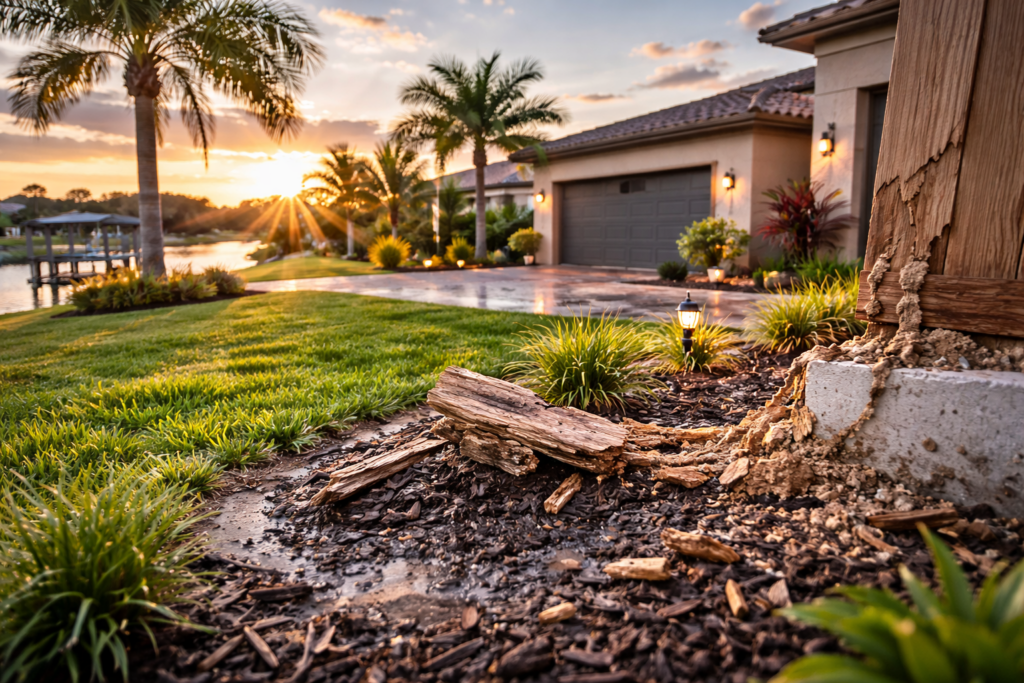
Termites feed continuously. In Southwest Florida’s year-round warm climate, there is no dormant season to slow them down. A subterranean colony can contain hundreds of thousands of individuals, and Formosan colonies can reach into the millions. Every month of delay increases the amount of structural damage and the cost of repair.
What starts as a localized problem in a single wall section can spread to floor joists, roof framing, and load-bearing members. Early treatment limits both the extent of damage and the cost of repair.
What Homeowner Insurance Does Not Cover in Florida
Standard homeowner insurance policies in Florida do not cover termite damage. Insurers classify it as a maintenance issue, not a sudden loss event. That means the full cost of structural repair falls on the property owner.
This is the primary financial reason to act quickly and invest in ongoing protection. The cost of professional treatment is a fraction of what structural repairs can run if damage is allowed to progress.
What to Expect From a Professional Termite Inspection in Cape Coral
How a Qualified Inspector Evaluates Your Property
A thorough termite inspection in Florida covers the interior, exterior, crawl spaces, attic, and foundation. The inspector looks for live termites, evidence of activity (mud tubes, frass, exit holes, damaged wood), signs of previous treatment, and conducive conditions such as wood-to-soil contact, moisture issues, and foundation cracks.
Inspections for real estate transactions follow the standards set by the Florida Structural Pest Control Act, Chapter 482 and require the inspector to issue FDACS Form 13645.
What the Inspection Report Should Include
A complete report documents the species identified, the location and extent of evidence, whether the activity appears current or historical, any visible damage, areas that were inaccessible, and conditions on the property that attract or support termite activity. It should also note any evidence of prior treatment.
This report is the foundation for any treatment recommendation. Without it, you cannot evaluate whether a proposed treatment plan matches the actual problem.
Red Flags That Suggest an Incomplete or Rushed Inspection
Be cautious if an inspector spends less than 30 minutes on the property, skips the attic or crawl space, does not probe or tap wood in suspect areas, or provides a treatment recommendation before completing the full evaluation. A quality inspection takes time because it requires examining every accessible area of the structure.
If the inspector cannot tell you which species was found or where specific evidence was located, the inspection was not thorough enough to guide a treatment decision.
Which Treatment Approach Fits Your Situation
Three primary treatment methods are used for termite control in Southwest Florida. Each addresses a different species, scenario, and level of severity. For more on how these methods work in practice, see Paske Pest Control’s overview of termite prevention methods.
Treatment Comparison: Bait System vs. Liquid Barrier vs. Fumigation
| Factor | Bait System | Liquid Barrier | Fumigation |
| Target species | Subterranean (incl. Formosan) | Subterranean (incl. Formosan) | Drywood |
| How it works | Stations placed around perimeter; termites carry bait to colony | Termiticide applied to soil around foundation creates treated zone | Structure tented and sealed; gas eliminates all drywood termites inside |
| Speed of results | Weeks to months for colony elimination | Immediate barrier; colony dies as workers contact treated soil | 2 to 3 days for full treatment cycle |
| Colony elimination | Yes; targets the entire colony including the queen | Partial; kills foragers but may not eliminate the colony source | Yes, within the structure; does not prevent future infestations |
| Ongoing monitoring | Yes; stations are checked on a regular schedule | No built-in monitoring; requires separate inspections | No; one-time treatment with no residual protection |
| Property disruption | Minimal; stations installed in the ground around perimeter | Moderate; requires trenching around the foundation | High; occupants must vacate for 2 to 3 days |
| Best fit | Long-term colony control and ongoing monitoring | Immediate protection; active subterranean infestations | Severe or widespread drywood infestations |
Bait Systems for Subterranean Termite Colonies
Bait systems use stations placed in the ground around the perimeter of the home. When foraging termites find the bait, they carry it back to the colony, where it spreads and eventually eliminates the colony, including the queen.
This process takes weeks to months but targets the root of the problem. For research-backed detail on how bait systems compare to liquid treatments, see the UF/IFAS comparison of termite bait systems and liquid treatments.
The trade-off: bait systems work slower than liquid barriers but provide ongoing monitoring as part of the service. Learn more about Paske Pest Control’s termite bait monitoring system for details on how this approach works in Cape Coral.
Liquid Barrier Treatments for Foundation Protection
Liquid treatments involve applying a termiticide to the soil around and beneath the foundation. This creates a treated zone that kills subterranean termites on contact as they attempt to reach the structure. The barrier begins working immediately and can remain effective for several years depending on the product and soil conditions.
The trade-off: liquid barriers act fast and provide strong perimeter defense, but they require trenching around the foundation, which can disrupt landscaping. Some barriers kill foraging termites without eliminating the entire colony, which means the colony may eventually find untreated entry points.
Fumigation for Widespread Drywood Infestations
Fumigation is used when drywood termites have infested multiple areas of a structure and localized spot treatments are not sufficient. The home is sealed with a tent, and a gas fumigant is released to penetrate all wood in the structure. Occupants, pets, and plants must be removed for two to three days.
The trade-off: fumigation is highly effective at eliminating drywood termites already inside the structure, but it provides no residual protection. New colonies can establish after the gas dissipates. Fumigation also does not address subterranean termites.
Why the Right Treatment Depends on the Species and Severity
A treatment designed for subterranean termites will not eliminate a drywood infestation, and fumigation will not stop a subterranean colony entering through the foundation. The inspection must identify the species before any treatment plan is proposed. In some cases, a property may require more than one treatment approach if both subterranean and drywood termites are present.
How to Evaluate a Termite Treatment Plan Before Signing
What a Good Treatment Proposal Should Include
A professional treatment proposal should clearly state the identified species, the recommended treatment method, the areas of the property to be treated, the products to be used, the expected timeline, any homeowner preparation required, the total cost, and the terms of any warranty or ongoing service agreement.
If a proposal is vague about what species was found or what product will be applied, ask for clarification before signing.
Questions to Ask Before Committing to a Provider
Before signing a treatment contract, ask these questions. They will help you evaluate whether the provider’s recommendation matches your situation. The EPA guidance on termite treatment and choosing a pest control company also recommends getting multiple estimates and verifying licensing.
1. Which termite species did you identify, and where was the evidence found?
2. What treatment method do you recommend, and why is it the best fit for my situation?
3. What products will you use, and how long does the treatment remain effective?
4. Does the plan include a warranty or service agreement? What does it cover?
5. Is the warranty retreatment-only, or does it include structural repair coverage?
6. What does the annual renewal cost, and what does it include?
7. Is the warranty transferable if I sell the home?
8. Are you licensed under the Florida Structural Pest Control Act, and will you provide a written report using FDACS Form 13645?
Choosing Ongoing Protection That Prevents Future Damage
What a Termite Bond or Warranty Covers in Florida
A termite bond is a service agreement between the homeowner and the pest control provider. It typically includes annual inspections and a commitment to retreat the property if termite activity is found during the coverage period. Bonds are renewed annually for a fee.
The scope of coverage varies by provider. Some bonds only cover retreatment. Others include repair costs for structural damage caused by termites during the coverage period. Understanding the difference before signing is critical.
Retreatment-Only vs. Retreatment-and-Repair Coverage
A retreatment-only warranty means the provider will treat the property again at no additional cost if termites return. However, any structural damage caused before the retreatment is the homeowner’s responsibility to repair.
A retreatment-and-repair warranty covers both the cost of retreatment and the cost of repairing structural damage caused by termites during the coverage period. This option costs more annually but provides stronger financial protection, especially in a high-risk environment like Cape Coral.
Why Annual Monitoring Matters in Southwest Florida
Cape Coral’s climate supports year-round termite activity. Colonies do not go dormant, and new swarmers establish colonies every spring. A one-time treatment addresses the current problem but does not prevent future infestations.
Annual monitoring, whether through a bait station system checked on a regular schedule or a standalone annual inspection, detects new activity before it reaches the level of structural damage. In a region with an average of 3 to 5 subterranean termite colonies per acre, monitoring is not optional; it is part of responsible homeownership.
How Ongoing Protection Adds Value When Selling Your Home
A transferable termite warranty can be a selling point in Cape Coral’s real estate market. Buyers and lenders want assurance that the property has been inspected and protected. An active termite bond with a documented treatment history gives buyers confidence and can simplify the closing process.
If you plan to sell your home in the future, maintaining an active warranty adds measurable value to the transaction.
How to Take the Next Step With Confidence
Start by confirming that your inspection was thorough and that you understand the species, severity, and scope of the problem. Compare at least two treatment proposals. Ask the questions listed above. Make sure the warranty terms are clear before signing.
If you are ready to schedule an inspection or discuss treatment options for your Cape Coral property, Paske Pest Control provides termite treatment in Cape Coral with licensed inspectors who follow Florida’s WDO standards and offer both bait system and liquid barrier options tailored to Southwest Florida conditions.
The cost of professional treatment and ongoing protection is an investment in your home’s structural integrity. In Cape Coral, where termites are active year-round, it is one of the most practical decisions a homeowner can make.
FAQs
How long does professional termite treatment last in Cape Coral Florida?
It depends on the method. Liquid barrier treatments can remain effective for five or more years in the soil, depending on the product and conditions. Bait systems provide continuous protection as long as the stations are maintained and monitored. Fumigation eliminates drywood termites inside the structure at the time of treatment but provides no lasting residual protection. Annual monitoring and warranty renewals are the most reliable way to maintain coverage over time.
Is a termite bond worth the cost in Cape Coral?
In most cases, yes. Cape Coral’s year-round termite activity and the fact that homeowner insurance does not cover termite damage make ongoing protection a practical financial decision. A termite bond ensures that if activity returns, retreatment is covered. Bonds with repair coverage provide even stronger protection. The annual renewal fee is a small cost compared to the potential expense of undetected structural damage.
Can I get a termite warranty transferred to the buyer when I sell my Cape Coral home?
Many termite warranties are transferable. This depends on the provider and the terms of the agreement. A transferable warranty with documented inspection and treatment history can simplify the closing process and give buyers confidence in the property’s condition. Ask your provider whether the warranty transfers and what steps are required at the time of sale.