
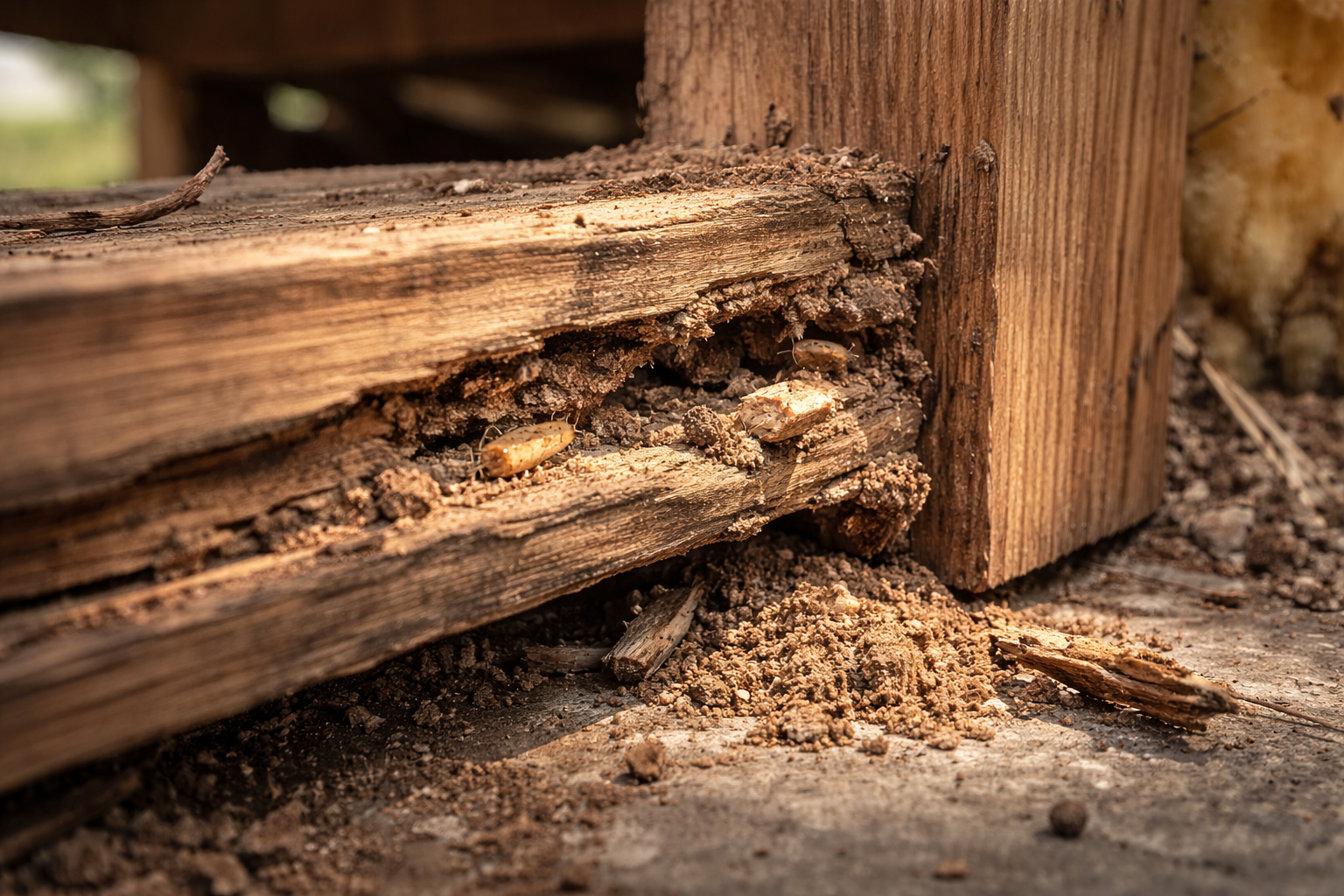
If you have noticed mud tubes along your foundation, small pellet-like droppings near baseboards, or translucent wings scattered on a windowsill, you are right to investigate. These are among the most common indicators of termite activity in Cape Coral homes.
The next step is not to panic or immediately commit to a treatment plan. It is to evaluate what kind of termite activity these signs suggest, how urgent the problem may be, and what a qualified inspection should reveal before any treatment begins. For a broader overview of what to look for, see Paske Pest Control’s guide to common signs of termite infestations.
This article walks through how to identify the signs, distinguish them from similar-looking issues, determine which species may be involved, and understand what a professional inspection should include.
How to Tell If What You Are Seeing Is Actually Termite Activity
Not every suspicious sign is a termite problem. But in Cape Coral, where termite pressure is year-round, each of the following deserves a closer look.
Mud Tubes on Foundations and Walls Point to Subterranean Termites
Mud tubes are pencil-width tunnels made of soil, wood particles, and saliva. Subterranean termites build them to travel between their colony in the ground and the wood they feed on. The tubes protect them from open air and predators.
Check the exterior foundation walls, interior baseboards, garage walls, and any exposed plumbing in crawl spaces. If you find mud tubes, the activity is almost certainly subterranean in origin. Breaking a tube open can help determine if it is still active. Live termites inside confirm current activity.
Small Pellet-Like Droppings Near Woodwork Suggest Drywood Termites
Drywood termites push their waste, called frass, out of small holes in infested wood. The droppings are tiny, ridged, and oval-shaped. They often accumulate in small piles below baseboards, windowsills, or attic framing.
Frass is a reliable indicator of drywood termites specifically. Unlike subterranean species, drywood termites do not need contact with soil and can establish colonies entirely within the wood of a structure.
Discarded Wings Near Windows and Doors Indicate a Recent Swarm
Reproductive termites, called swarmers, leave the colony to mate and start new colonies. After landing, they shed their wings. Finding clusters of small, equal-length wings near light sources, windowsills, or door frames means a swarm has occurred recently on or near your property.
In Cape Coral, swarming peaks between February and April, though some species swarm at other times of year. The presence of wings does not always mean your home is infested, but it does mean colonies are active nearby and your structure should be evaluated.
Hollow-Sounding Wood, Bubbling Paint, and Sticking Doors May Signal Hidden Damage
Termites consume wood from the inside out. Tap door frames, baseboards, and window trim with the handle of a screwdriver. Wood that sounds hollow or papery may already be compromised.
Bubbling or peeling paint with no obvious water source can indicate moisture produced by termites feeding beneath the surface. Doors or windows that suddenly stick or no longer close properly may point to structural shifting caused by termite damage to framing.
Termite Signs That Look Like Something Else
Several common termite indicators are frequently mistaken for other issues. Knowing the differences helps you evaluate what you are seeing more accurately.
Termite Wings vs. Ant Wings
Termite swarmers and flying ants look similar at a glance, but the wings are different. Termite wings are equal in length, front and back. Ant wings have a longer front pair and a shorter back pair. Termite wings also break off easily and are often found without the insect attached. Ant wings stay attached more firmly.
If you are finding equal-length wings in clusters near light sources, termites are the more likely source.
Frass vs. Sawdust
Termite frass is oval, ridged, and roughly the size of a grain of sand. Sawdust from carpenter ants or woodworking is irregular, fibrous, and often mixed with insect body parts or debris. Carpenter ant waste, called refuse, also tends to include dead ants.
If the material is uniform, pellet-shaped, and found below a small hole in wood, it is most likely drywood termite frass.
Termite Damage vs. Water Damage or Wood Rot
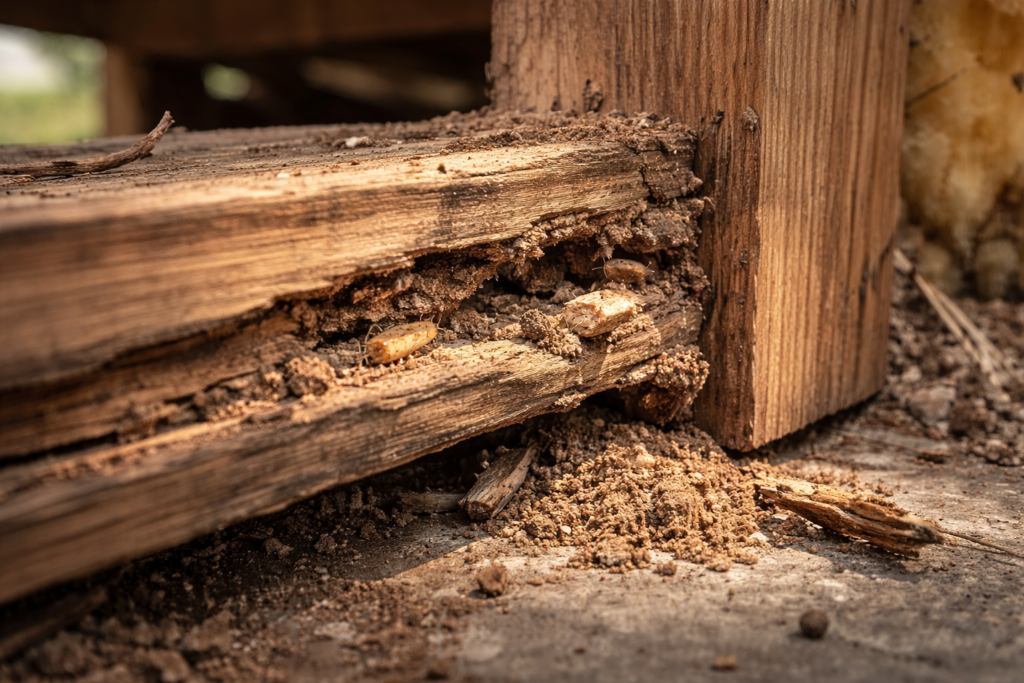
Both termite damage and water damage can cause paint to bubble and wood to warp. The key difference is the pattern. Termite-damaged wood, when broken open, reveals layered galleries that follow the grain. Water-damaged wood is typically soft, discolored, and may show mold or fungal growth.
In Cape Coral, where both moisture and termites are constant concerns, it is common for both to occur together. Moisture attracts termites, so water-damaged areas often become termite entry points as well.
Which Type of Termite Threat Is Most Likely in Cape Coral
Three categories of termites cause most residential damage in Southwest Florida. Each has different behavior, signs, and treatment needs. For species-level data, see the UF/IFAS termite species distribution in Florida publication.
Subterranean vs. Drywood vs. Dampwood Termites: Key Differences
| Feature | Subterranean (incl. Formosan) | Drywood | Dampwood |
| Soil contact required | Yes | No | No |
| Primary sign | Mud tubes on foundation | Frass (pellet droppings) | Damaged wood near moisture |
| Colony size | Hundreds of thousands to millions | A few thousand | A few thousand |
| Damage speed | Fast (months for Formosan) | Slow (years to mature) | Slow |
| Common treatment | Liquid barrier or bait system | Spot treatment or fumigation | Moisture correction, spot treatment |
| Swarming season (Cape Coral) | February through April | April through July (varies) | Late spring to early winter |
Why the Species Matters for Treatment
Subterranean termites are treated with soil-applied liquid barriers or bait systems that target the colony underground. Drywood termites require direct treatment of infested wood, and severe infestations may require whole-structure fumigation. Dampwood termites are controlled by eliminating the moisture source.
Identifying the correct species before treatment begins prevents wasted time and expense. A treatment designed for subterranean termites will not eliminate a drywood infestation, and vice versa.
How Serious Is the Risk? Evaluating What You Have Found
Not every sign of termites means your home is under immediate threat. Understanding the difference between active and inactive indicators helps you gauge the urgency.
Signs That Suggest an Active Infestation
Live termites in broken mud tubes, fresh frass accumulating below kick-out holes, swarmers emerging inside the home, and wood that yields soft or crumbling material when probed all point to active feeding. These signs require prompt professional evaluation.
Signs That May Indicate Past or Inactive Activity
Dry, crumbling mud tubes with no live termites inside, old frass piles with no new accumulation, and previously treated areas with no fresh evidence may indicate past activity that is no longer current. An inspection can confirm whether the threat has passed or whether a colony has simply moved to a different area of the structure.
Conditions That Increase the Likelihood of a Growing Problem
Wood-to-soil contact near the foundation, mulch or landscaping debris piled against exterior walls, standing water or poor drainage, leaky pipes, cracks in the slab, and gaps around utility penetrations all create conditions that attract and sustain termite colonies.
If you are seeing termite signs and your property has one or more of these conditions, the probability of an active or expanding infestation is higher.
What a Professional Termite Inspection Should Include in Cape Coral
What a WDO Inspection Covers in Florida
In Florida, termite inspections for real estate transactions and many general evaluations follow the Wood-Destroying Organisms (WDO) inspection standard. This is regulated under the Florida Structural Pest Control Act, Chapter 482 and requires the inspector to issue FDACS Form 13645.
A WDO inspection covers visible and accessible evidence of subterranean termites, drywood termites, wood-destroying beetles, and wood-decaying fungi. The inspector examines the interior, exterior, crawl spaces, and attic. The report documents any evidence of live infestation, damage, signs of previous treatment, and areas that were inaccessible during the inspection.
The form is a snapshot of the structure’s condition at the time of the inspection. It does not guarantee the absence of termites in areas that could not be visually examined.
Key Findings That Matter Before Choosing Treatment
Before committing to a treatment plan, make sure the inspection identifies which species is present, where evidence was found, whether the activity appears current or historical, what conducive conditions exist on the property, and whether there are signs of previous treatment.
These findings determine the appropriate treatment method. For subterranean termites, a termite bait monitoring system may be recommended for ongoing colony control. Drywood infestations may require localized treatment or fumigation depending on the extent of the problem.
Questions to Ask Your Inspector Before Moving Forward
Ask your inspector: Which species did you find, and where? Is the activity current or does it appear to be from a previous infestation? What conducive conditions did you observe on the property? What treatment options do you recommend, and why? Will you provide a written report using FDACS Form 13645?
A qualified inspector should answer these questions clearly and provide documentation. According to the EPA guide to termite identification and control, homeowners should always request a written inspection report and compare recommendations from multiple providers before choosing a treatment plan.
What Cape Coral Homeowners Should Do After Spotting Possible Termite Signs
Start with a visual evaluation of your property. Check the foundation for mud tubes. Look for frass near baseboards and windowsills. Tap exposed wood and listen for hollow sounds. Note any moisture problems, wood-to-soil contact, or recent swarm activity.
Then schedule a professional WDO inspection with a licensed provider. A trained technician can confirm the species, assess the severity, and recommend treatment options based on what is actually found. Paske Pest Control provides termite treatment in Cape Coral with inspections that follow Florida’s WDO standards and address the specific conditions of Southwest Florida properties.
The goal is not to rush into treatment. It is important to understand the problem first, so the solution matches the actual threat.
FAQs
Do mud tubes always mean I have an active termite infestation?
Not necessarily. Mud tubes confirm that subterranean termites have been active on the property, but dried, empty tubes may indicate past activity rather than a current infestation. Breaking a tube open to check for live termites is a quick initial test. A professional inspection can determine whether the colony is still active or has moved.
What is the difference between a WDO inspection and a standard home inspection?
A standard home inspection does not include termite evaluation. A WDO inspection is a separate service performed by a licensed pest control professional. In Florida, it follows Chapter 482 of the Florida Statutes and produces FDACS Form 13645, which documents evidence of termites, other wood-destroying organisms, damage, and inaccessible areas. Most mortgage lenders require a WDO inspection before closing on a property.
How do I know if termite damage is old or new?
Old termite damage is typically dry, weathered, and shows no signs of fresh activity such as live termites, new frass, or rebuilt mud tubes. New damage often appears alongside live insects, fresh frass accumulation, or intact mud tubes with moisture. A licensed inspector can evaluate the age and activity level of any damage found in the structure.