
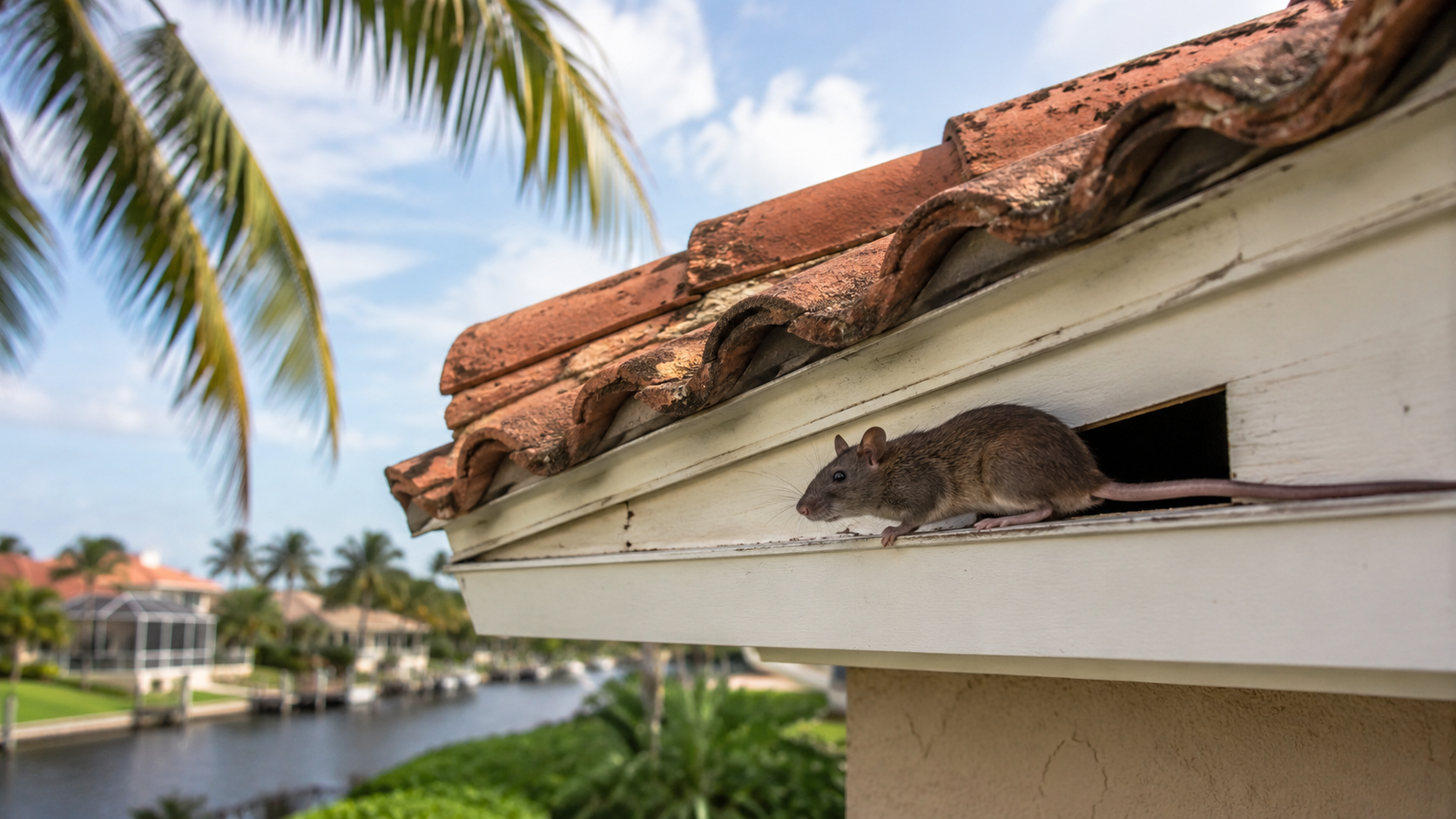
Rats are common in Cape Coral because the area’s subtropical climate, canal system, palm trees, and tile roof construction create nearly perfect conditions for roof rats. Populations stay active year-round, water is everywhere, and homes provide both food and shelter.
Roof rats are the dominant species in Southwest Florida. They climb palm trees and power lines to reach attics through small gaps in the soffit or roof line. Norway rats are present but less common, and “palm rats” are simply a local nickname for roof rats.
This guide covers why rats thrive in Cape Coral, which species you are likely dealing with, where they nest, the health and property risks they pose, and the conditions on your property that attract them. For homeowners who already need help, Paske Pest Control provides pest control in Cape Coral with rodent inspections that start at the roof line.
Why Rats Thrive in Cape Coral Year-Round
Three local conditions overlap to keep rat populations active in Cape Coral every month of the year: a subtropical climate with no winter freeze, constant water from canals and irrigation, and a steady food supply from yards and landscaping.
In colder regions, winter cold kills off a portion of the rat population each year. Cape Coral does not give them that pause.
Subtropical Climate Means No Off-Season for Rat Populations
Average lows in Cape Coral rarely drop below 55 degrees, even in January. Rats remain active, foraging, and reproducing year-round.
A single female roof rat can produce four to six litters per year, with five to eight pups per litter. With no seasonal die-off, populations grow continuously.
Canals, Landscaping, and Pools Provide Constant Water Sources
Cape Coral has more than 400 miles of canals, plus thousands of pools, irrigation systems, and landscape water features. Rats need daily water access, and Cape Coral provides it almost anywhere they go.
This is one of the main reasons roof rat populations are denser here than in most of the country.
Fruit Trees, Pet Food, and Birdseed Sustain Rats in Local Yards
Roof rats are especially drawn to fruit trees: mango, citrus, avocado, and loquat are favorites. Fallen fruit on the ground supports large outdoor populations.
Outdoor pet food bowls, bird feeders, and uncovered trash containers also feed rats. Once a yard provides a reliable food source, rats are usually close by.
Which Rat Species Are Most Common in Cape Coral
Roof rats are by far the most common rat in Cape Coral and the species most homeowners encounter. Norway rats are less common but do occur, typically at ground level. The “palm rat” is not a separate species; it is a local nickname for roof rats that nest in palm trees. For full species details, see the UF/IFAS roof rat species profile.
Roof Rats: The Dominant Species in Southwest Florida
Roof rats are slim and agile, with long tails that exceed the length of their bodies. They are skilled climbers and prefer elevated nesting locations.
In Cape Coral, that means attics, soffits, roof eaves, and the tops of palm trees. They reach roofs by climbing trees, power lines, and trellised landscaping.
Norway Rats: Less Common but Still Present
Norway rats are heavier, stockier, and have shorter tails than roof rats. They prefer ground-level burrows over climbing.
In Cape Coral, Norway rats are most often found burrowing under slabs, patios, AC pads, and sheds. They are less common than roof rats but can be significant in yards with drainage issues or dense ground cover.
Palm Rats and Why the Name Is Misleading
Many Cape Coral homeowners use “palm rat” to describe rats nesting in palm trees. There is no separate palm rat species. The rats nesting in your palms are roof rats.
The nickname stuck because palms offer roof rats ideal cover: dense fronds, hidden cavities, and elevated access to nearby rooflines.
Where Rats Nest Around Cape Coral Homes
Roof rats nest in elevated, sheltered areas: attics, soffits, palm trees, and dense landscaping. Norway rats nest at ground level in burrows beneath slabs, patios, and outdoor storage. Cape Coral’s tile-roof construction and tropical landscaping create more nesting opportunities than the average American home.
Attics, Soffits, and Roof Lines
Attics are the single most common indoor nesting location for roof rats in Cape Coral. Once inside, they tunnel through insulation, chew through drywall, and use the space as a base for nightly foraging.
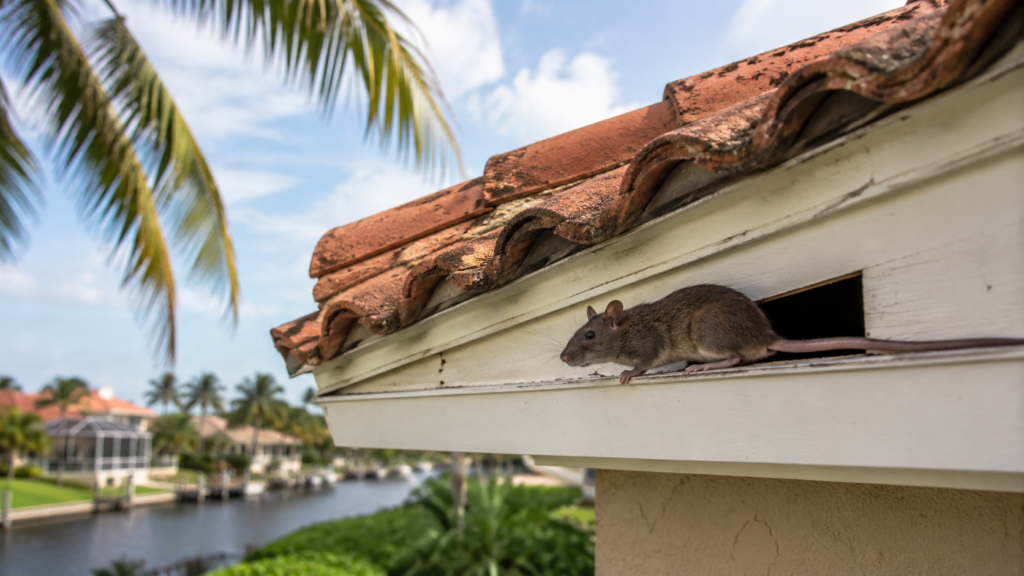
Roof rats enter through soffit gaps, damaged fascia, plumbing penetrations, and the joints where tile roofs meet flashing. Openings as small as a half inch are enough for an adult rat to squeeze through.
Palm Trees, Dense Landscaping, and Sea Grape Hedges
Palm trees with unpruned fronds provide cover, shelter, and a launching point for rats to reach the roof. The same goes for sea grape hedges, dense shrubs, and any landscaping touching the structure.
Rats use these as highways. Trimming palms and keeping a gap between vegetation and exterior walls removes the route.
Garages, Sheds, and Outdoor Storage
Cluttered garages, sheds, and outdoor storage areas provide shelter and harborage. Stored cardboard, fabric, and undisturbed corners all attract nesting activity.
Cape Coral homes with detached sheds or pool equipment housings often have rodent activity in these structures before any signs appear in the main home.
Burrows Under Slabs, Patios, and AC Pads
Norway rats burrow into soil under concrete pads, patios, and sheds. Look for holes two to three inches in diameter, often with a smooth, well-worn appearance.
These burrows can undermine slab edges over time and create entry routes into garages or storage rooms.
Health and Property Risks From Rats in Cape Coral
Rats pose two categories of risk to Cape Coral homeowners: disease transmission through droppings, urine, and contact, and structural damage from chewing wires, insulation, and wood. Both are serious. The CDC guidance on diseases from rodents outlines the health risks in full.
Diseases Rats Spread Through Droppings, Urine, and Contact
Rats can transmit leptospirosis, salmonella, and rat-bite fever, among other pathogens. Exposure typically occurs through contact with droppings, contaminated surfaces, or water sources that rats have used.
In Cape Coral, leptospirosis is a particular concern because rat urine can contaminate standing water in yards, puddles, and water features. Children and pets are most at risk.
Electrical Wire Damage and the Risk of House Fires
Rats chew constantly. Their incisors grow continuously, and gnawing keeps them at a usable length.
In Cape Coral attics, this often means chewed electrical wiring. Exposed copper inside walls or ceilings is a documented cause of house fires, and insurance claims related to rodent-caused electrical damage have climbed steadily in Florida over the past decade.
Insulation Contamination and Structural Damage
Rats tunnel through attic insulation, compress it, and contaminate it with urine and droppings. Damaged insulation loses its R-value, which raises cooling costs in a region where AC runs most of the year.
After a significant infestation, attic insulation often has to be removed and replaced. This is not a minor repair.
What Conditions Around Your Home Attract Rats
Four conditions consistently increase rat activity around Cape Coral homes: accessible food sources, easy water access, dense landscaping or palm trees touching the roof line, and unsealed entry points around the soffit and foundation.
Outdoor pet food bowls and bird feeders are major attractants. Move pet food indoors at night, and place bird feeders well away from the house.
Fallen fruit from mango, citrus, and avocado trees should be cleaned up regularly. Even a week of accumulated fruit can sustain a small rat population.
Trim palm fronds away from rooflines and keep shrubs from touching exterior walls. This removes the primary access route roof rats use to reach attics.
Seal gaps in soffits, fascia, vents, and around plumbing penetrations. Roof rats only need a half-inch opening to enter.
When Cape Coral Homeowners Should Be Concerned
Be concerned when you hear scratching or thumping in the attic at night, find droppings in the garage or pantry, see gnaw marks on stored items, or notice rats running along power lines or fence tops at dusk. Any one of these signals that activity is close enough to warrant inspection. The EPA guidance on rodenticide safety also notes that DIY bait use without exclusion often makes problems worse, not better.
Professional inspection identifies entry points, active nests, and the conditions sustaining the activity. Paske Pest Control offers rodent control in Cape Coral with attic, exterior, and ground-level inspections.
For homeowners who want ongoing protection rather than a one-time response, year-round pest control plans include rodent monitoring alongside other common Cape Coral pests. In a region where rats are active every month, ongoing monitoring is the most reliable way to catch new activity early.
FAQs
Are the rats in my Cape Coral attic roof rats or Norway rats?
Almost certainly roof rats. Roof rats dominate Southwest Florida and are the species responsible for nearly all attic infestations in Cape Coral.
Norway rats are heavier, prefer ground-level burrows, and are uncommon in attics. If you are hearing scratching or scurrying overhead, you are dealing with roof rats.
Can rats really chew through electrical wiring and cause a fire?
Yes. Rat incisors grow continuously, and gnawing on wires, framing, and pipes is a normal behavior.
Exposed copper from chewed wiring is a recognized cause of attic and wall fires. This is one of the reasons rat infestations should be addressed promptly rather than monitored.
What attracts rats to Cape Coral homes more than other places?
The combination of subtropical climate, canal water access, palm trees that touch rooflines, fruit trees, and tile-roof construction that creates gaps at the eaves.
Most other regions have one or two of these conditions. Cape Coral has all of them, which is why rat pressure here is among the highest in the country.