
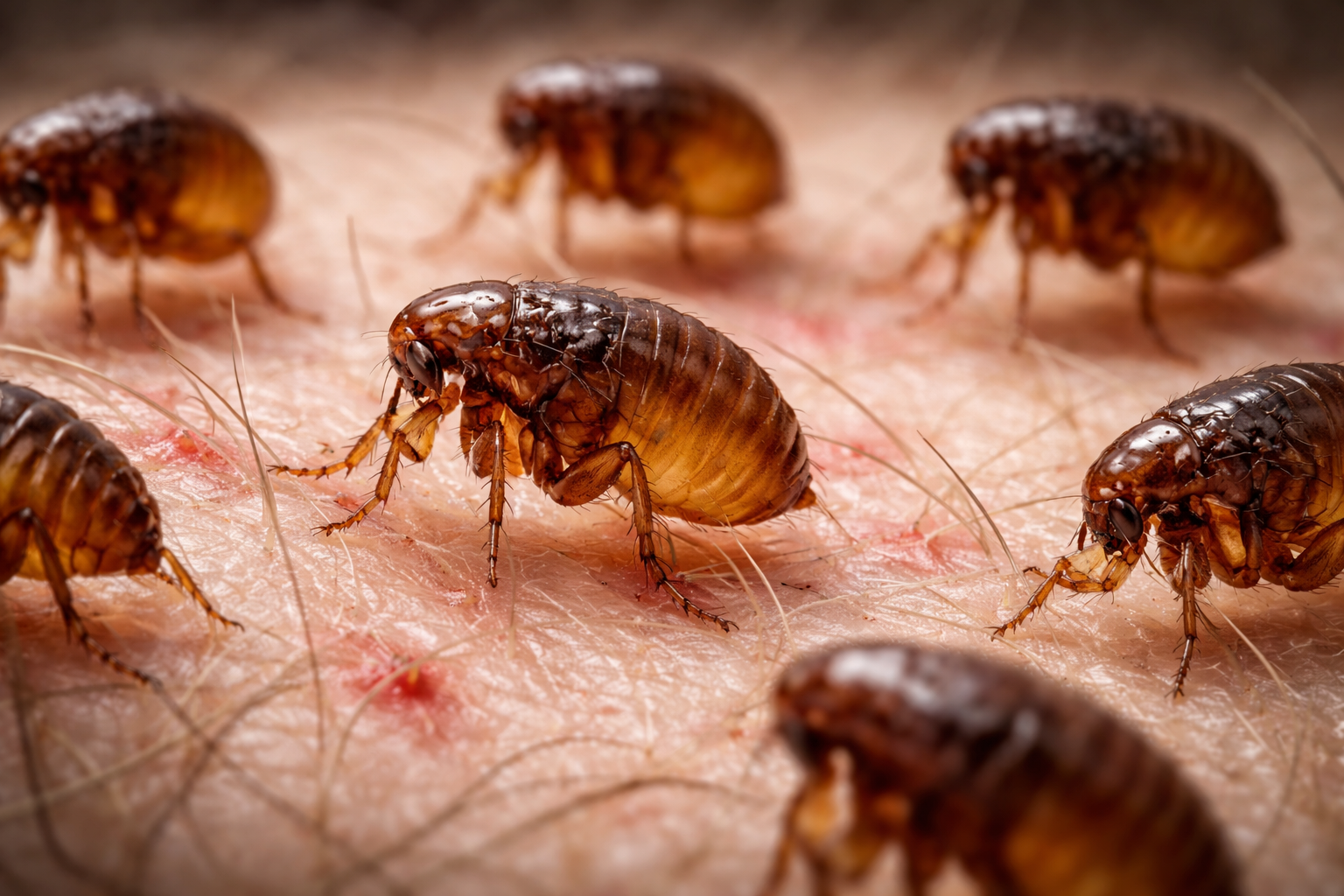
Flea Control in Southwest Florida That Breaks the Breeding Cycle and Keeps Fleas Out
Get your home and pets protected before a few fleas become thousands
Serving Lee, Charlotte, Sarasota, and Collier Counties
★★★★★ 4.8 Google Rating
970+ Reviews
🎖️ Veteran-Owned
👨👩👧👦 Family Operated
✔ 100% Guarantee
WHAT YOU GET
✔ 100% Guarantee
✔ Same-day service when you call before noon
✔ Full property inspection covering interior, exterior, and pet areas
✔ Targeted treatment that reaches eggs, larvae, pupae, and adults
✔ Interior and exterior coverage, including carpets, furniture, yards, and shaded harborage areas
✔ Family- and pet-safe treatment methods
✔ Follow-up service to break the pupal cycle and confirm elimination
The fleas you see jumping on your pet or carpet are less than 5% of the infestation.
The other 95% are eggs, larvae, and pupae hidden in carpet fibers, furniture cushions, pet bedding, and cracks in flooring.
A single adult female lays up to 50 eggs per day. Without treatment that reaches every life stage, the population doubles in days.
Store-bought flea bombs scatter chemicals into the air but do not penetrate carpet fibers, furniture seams, or the shaded outdoor areas where larvae develop.
Surviving eggs hatch within days, restarting the cycle. Effective flea control requires targeted treatment of every life stage, indoors and out, combined with ongoing prevention.
Flea Infestations in Southwest Florida Grow Faster Than You Expect
Southwest Florida’s subtropical climate keeps fleas active year-round. There is no winter die-off. Warm temperatures and high humidity accelerate every stage of the flea life cycle, from egg to adult, faster than in any other region of the country.
How Fast They Multiply
One adult female flea produces up to 50 eggs per day. Those eggs fall off your pet into carpet, upholstery, bedding, and floor cracks within hours. In Southwest Florida’s humidity, eggs hatch into larvae in as little as 2 days. Larvae spin cocoons and become pupae that can survive for months, even in treated homes, waiting for vibration, heat, or carbon dioxide to trigger emergence. A small flea problem becomes a full infestation in under two weeks.
How They Get Inside
Fleas hitchhike on dogs, cats, and even on your shoes and clothing. Homes without pets still get flea infestations from previous occupants, visiting animals, or wildlife like raccoons and opossums nesting near the structure. In Lee, Collier, Charlotte, and Sarasota counties, proximity to canals, preserves, and pet-friendly parks increases year-round exposure.
What They Cost You
Flea bites cause intense itching and red welts on both people and pets. Pets develop flea allergy dermatitis, leading to hair loss and skin infections. Fleas transmit tapeworms to dogs, cats, and children. In Florida, fleas are also carriers of murine typhus, a bacterial illness transmitted through flea droppings. The longer an infestation goes untreated, the deeper eggs and larvae embed into your home.
Eliminate Every Life Stage and Stop the Flea Cycle for Good
Killing the fleas jumping on your pet leaves thousands of eggs, larvae, and pupae behind. Professional flea control in Southwest Florida eliminates infestations at every life stage by combining three things.
Inspection
Your licensed technician inspects the full interior, including carpets, pet bedding, furniture, baseboards, and closets. The exterior inspection covers shaded yard areas, under decks, along fence lines, and anywhere pets rest or wildlife travels. Every harborage area is documented so you know exactly where flea activity is concentrated and what treatment is needed.
Treatment
Your treatment plan targets every life stage. Interior applications reach deep into carpet fibers, upholstery, and floor cracks where eggs and larvae hide. Growth regulators prevent eggs and larvae from developing into biting adults. Exterior treatment covers shaded, moist areas of the yard where fleas breed before entering the home. Products are selected to be safe for your family and pets while remaining lethal to fleas at every stage.
Prevention
lea pupae can survive inside cocoons for weeks, even after treatment. A follow-up visit 14 to 21 days after initial service catches newly emerged adults before they can lay eggs and restart the cycle. Your technician re-inspects the property, re-treats as needed, and confirms that the breeding cycle has been broken. You receive documentation of every visit.
Results You Can Expect
✓ Adult flea activity eliminated within days of initial treatment
✓ Eggs and larvae destroyed in carpets, furniture, and outdoor harborage areas
✓ Follow-up visit to catch pupal emergence and confirm the cycle is broken
✓ Free re-treatment if fleas return between scheduled visits
Eliminate Fleas and Prevent Re-Infestation in 4 Easy Steps
1
Tell Us What You’re Dealing With
Call or request service online. Describe where you’re seeing flea activity, whether pets are in the home, and how long bites or scratching have been happening.
2
Same-Day Inspection Available
Your licensed technician inspects every room, pet area, and outdoor zone. Harborage areas, breeding sites, and flea activity levels are identified and documented. You receive a clear explanation of the findings and the recommended treatment plan before anything begins.
3
Full Life-Cycle Treatment
Your home receives interior and exterior treatment targeting adults, eggs, larvae, and pupae. Growth regulators are applied to prevent immature fleas from reaching adulthood. You receive photos and documentation of all treated areas.
4
Follow-Up and Prevention
Your technician returns 14 to 21 days later to catch newly emerged pupae, re-treat as needed, and confirm the breeding cycle is broken. For homes with pets or ongoing wildlife exposure, scheduled prevention visits keep your property protected year-round.
Your only job is to enjoy your home without checking your ankles every time you sit down.
Why Paske Flea Control Works When Others Fail
✓ Inspection, full life-cycle treatment, and follow-up handled together
✓ Every life stage targeted: adults, eggs, larvae, and pupae
✓Growth regulators that prevent immature fleas from becoming biting adults
✓Interior and exterior treatment covering carpets, furniture, yards, and wildlife pathways
✓ Same-day service available
✓ Biologist on staff for severe or recurring infestations tied to wildlife activity
✓ 30+ years of pest control experience
✓ 100% satisfaction guarantee
What Customers Are Saying Across Southwest Florida
★★★★★ 4.8 Average Rating
970+ Google Reviews
Veteran-Owned & Family Operated
★★★★★
Technician was super polite and courteous. As well he was informative with great purpose in his work. I am impressed and HIGHLY recommend this company.
Dave M.
★★★★★
We had rats in our attic for months. Paske came out same day, identified every entry point, and had the problem solved in under three weeks. Their monitoring gives us peace of mind.
Maria L.
★★★★★
Professional from start to finish. They documented everything with photos and explained exactly what they were doing. The exclusion work is solid and I haven’t had any issues since.
James T.
Flea Control Pricing
Complete Flea Elimination Package
$299 initial service, then $149
✓ Includes full property inspection, interior and exterior treatment, growth regulator application, follow-up visit, documentation, and re-treatment guarantee.
✓ Custom pricing available for large properties, multi-pet households, commercial locations, and properties with recurring wildlife-driven infestations.
Custom pricing available for large properties, commercial locations, or severe infestations.
SWF Flea Pest Control FAQs
How do fleas get inside homes without pets?
Fleas enter on shoes, clothing, and through open doors. They also come from wildlife like raccoons, opossums, and feral cats nesting near or under the structure. Homes that previously had pets can harbor dormant flea pupae in carpet and flooring for months. Those pupae hatch when they detect vibration, heat, or carbon dioxide from new occupants.
Why am I still seeing fleas after using a flea bomb?
Flea bombs release product into the air but do not penetrate carpet fibers, furniture cushions, or floor cracks where eggs and larvae hide. They also have no effect on pupae, which are protected inside cocoons. The fleas appearing after a bomb are newly emerged adults that survived as pupae during treatment. Professional treatment uses products that reach deep into harborage areas and includes growth regulators that prevent immature stages from developing.
Are flea treatments safe for pets and children?
Yes. All products used are EPA-approved and applied to targeted harborage areas. Your technician explains any temporary precautions, such as keeping pets off treated carpets until dry, before treatment begins. Non-chemical options are available for sensitive situations.
How long does it take to eliminate a flea infestation?
Adult flea activity drops significantly within 24 to 48 hours of treatment. Full elimination, including eggs, larvae, and emerging pupae, requires 2 to 4 weeks. The follow-up visit at 14 to 21 days catches newly emerged adults before they reproduce. Severe infestations or homes with heavy pet traffic may need one additional follow-up.
What if fleas come back after treatment?
If fleas return between scheduled visits, re-treatment is provided at no additional cost. That is the Paske guarantee. Your technician also helps identify the re-infestation source, whether it is a pet, wildlife activity, or exposure from a neighboring property, so the root cause gets addressed.
Do I need to vacuum before flea treatment?
Yes. Vacuuming before treatment is one of the most effective things you can do to improve results. It removes loose eggs and larvae from carpet fibers and, more importantly, the vibration triggers dormant pupae to emerge as adults, making them vulnerable to treatment. Your technician provides a complete preparation checklist before the scheduled visit.
Can fleas transmit diseases to my family?
Yes. Fleas transmit tapeworms to pets and children who accidentally ingest a flea. In Florida, fleas also carry murine typhus, a bacterial illness spread through flea droppings that enter the body through bite wounds or mucous membranes. Flea allergy dermatitis is common in pets and causes hair loss, skin infections, and chronic discomfort. Prompt treatment reduces these health risks for your entire household.
My pet is on flea prevention. Why do I still have fleas?
Pet flea preventatives kill fleas that bite your pet, but they do not treat the eggs, larvae, and pupae already in your carpet, furniture, and yard. A single pet can drop hundreds of eggs per day into the home before the preventative kills the adult fleas. The infestation cycle continues in the environment even while your pet is protected. Professional treatment targets the environment where 95% of the flea population lives.
Do I need ongoing flea prevention?
In Southwest Florida, flea pressure is constant. Warm temperatures and humidity support flea breeding 12 months a year. Homes with pets, wildlife nearby, or neighbors with untreated infestations face continuous re-exposure. Scheduled prevention visits maintain a treated barrier around the property and catch new activity before it becomes another infestation.
Does outdoor treatment help with fleas?
Yes. Flea larvae develop in shaded, moist areas of the yard, under decks, along fence lines, and wherever pets rest outdoors. Without exterior treatment, fleas re-enter the home continuously on pets and shoes. A complete flea control plan treats both interior and exterior to cut off the source.
Take the Next Step
Ready to Stop the Cycle?
Schedule service today. Call before noon for same-day availability across Sarasota, Charlotte, Lee, and Collier Counties.