
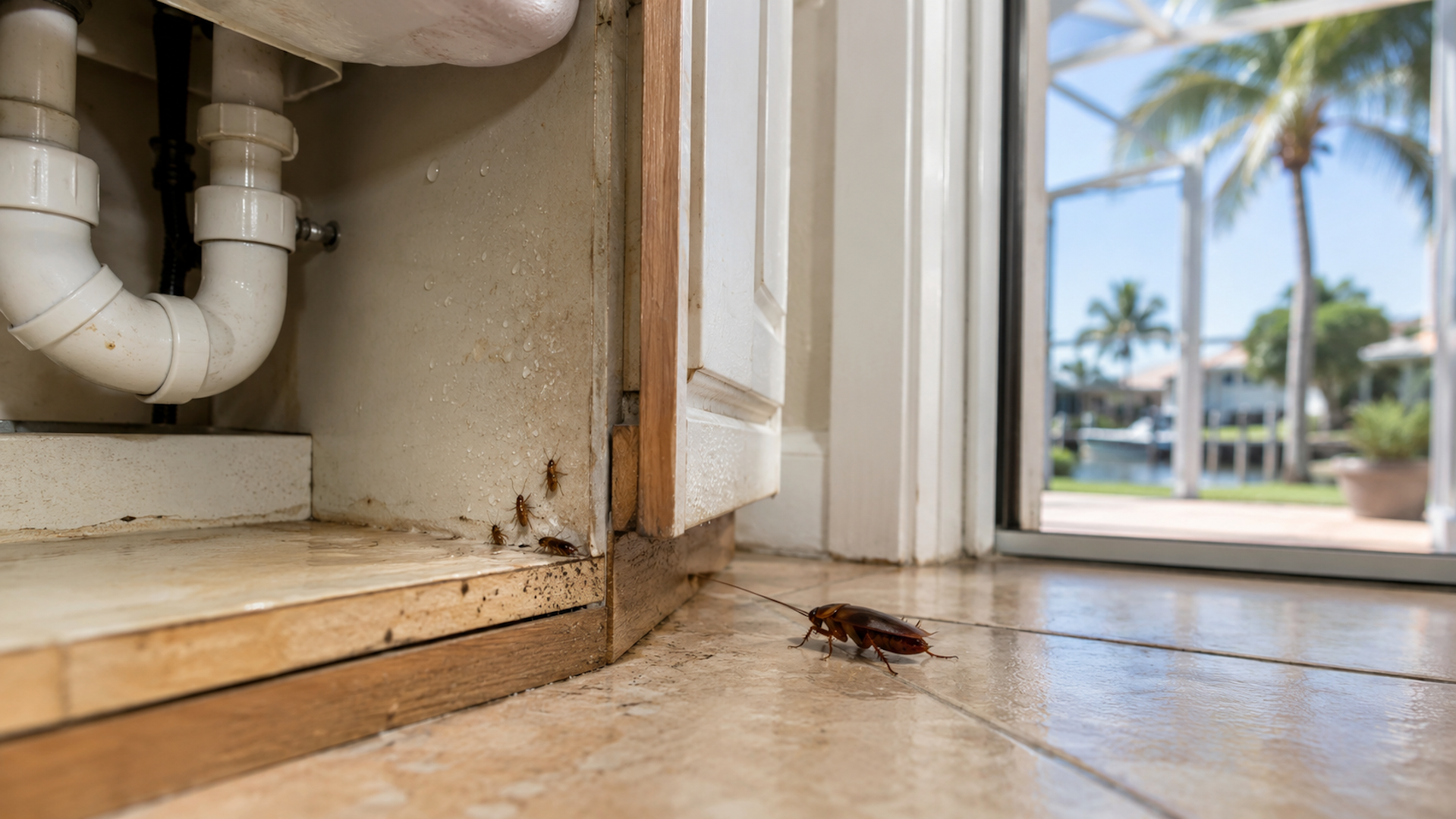
Cockroaches are common in Cape Coral because the area’s year-round heat, high humidity, and constant moisture create ideal conditions for several species to thrive. There is no cold season to slow them down, and homes provide the warmth, water, and food they need.
The roaches you see fall into two broad groups: large outdoor species like the American cockroach (the local “palmetto bug”) that wander in, and the small German cockroach that breeds indoors and is far harder to control.
This guide covers why roaches thrive here, which species you are likely seeing, the difference between palmetto bugs and German roaches, and the health risks they pose. For help now, Paske Pest Control offers Cape Coral Pest Control and professional Cape Coral cockroach removal.
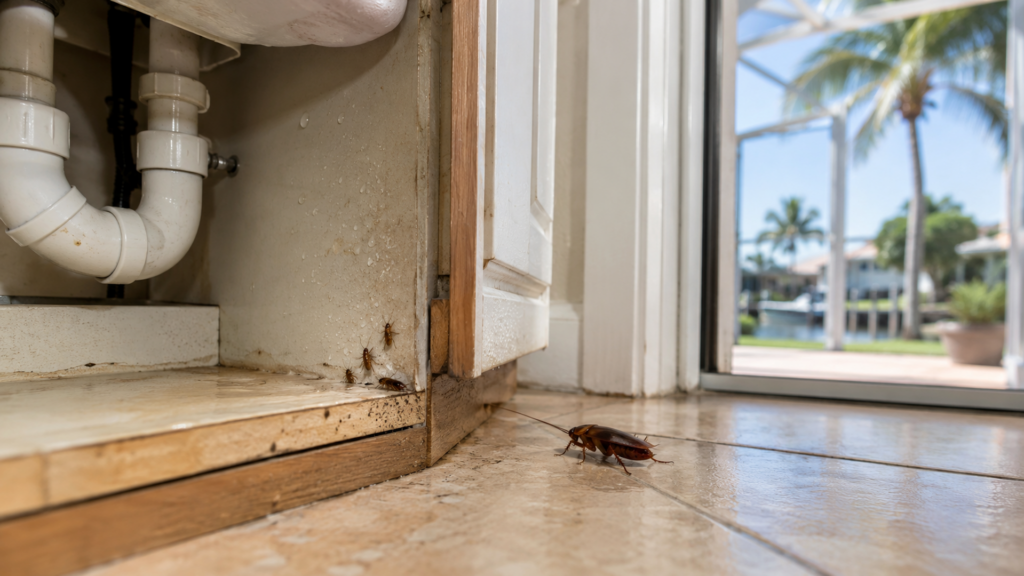
Why Cockroaches Thrive in Cape Coral Year-Round
Three local conditions keep cockroach populations active in Cape Coral every month of the year: a subtropical climate with no winter freeze, constant moisture from humidity and the canal system, and easy access to food inside and outside homes.
Subtropical Climate Means No Off-Season
Cockroaches need warmth to feed and reproduce. Cape Coral’s temperatures stay warm enough year-round that roaches never go dormant.
Populations grow continuously, which is why roach pressure here is higher than in most of the country.
Moisture From Humidity, Canals, and Plumbing
Roaches need water more than food. Cape Coral’s humidity, 400-plus miles of canals, and household moisture sources give them constant access.
Leaky pipes, condensation around AC units, and damp areas under sinks are some of the most common indoor draws.
Food Sources Inside and Around the Home
Crumbs, grease, pet food, garbage, and organic debris all feed cockroaches. Outdoor species also feed on mulch, leaf litter, and decaying plant matter.
Once a reliable food and water source exists, roaches tend to stay close.
Which Cockroach Species Are Most Common in Cape Coral
Cape Coral homeowners most often encounter American cockroaches, German cockroaches, smokybrown cockroaches, and Asian cockroaches. The American is the large “palmetto bug,” while the German is the small indoor breeder. For detailed identification, see the UF Featured Creatures American cockroach profile.
American Cockroach (Palmetto Bug)
The American cockroach is the largest roach found in Cape Coral homes, reaching up to two inches. It is reddish-brown with a yellowish figure-eight pattern behind the head and can fly short distances.
It lives mostly outdoors in mulch, sewers, and damp areas, entering homes through drains and gaps during heat or heavy rain. A single sighting often means a wanderer, not an infestation.
German Cockroach
The German cockroach is small, about half an inch, light brown with two dark stripes behind the head. It is an indoor species that breeds rapidly in kitchens and bathrooms.
This is the most problematic roach in any home. It produces more eggs than any other species, and a sighting usually signals an established infestation rather than a stray.
Smokybrown Cockroach
The smokybrown cockroach is also called a palmetto bug. It is shiny dark brown or mahogany, slightly smaller than the American, and a strong flier drawn to lights at night.
It nests in gutters, tree holes, and other moist outdoor areas, entering homes much like the American cockroach.
Asian Cockroach
The Asian cockroach looks almost identical to the German cockroach but lives outdoors and flies readily toward light. It is common in Cape Coral lawns and landscaping.
Because it is attracted to light, it often flies toward lit windows and doorways at dusk, then slips inside.
Florida Woods and Oriental Cockroaches
Florida woods cockroaches are large and dark, often mistaken for water bugs, and live in mulch and leaf litter. Oriental cockroaches are dark and glossy and prefer damp areas like crawl spaces and utility rooms.
Both are less common indoors but can appear in homes with moisture problems or heavy landscaping against the foundation.
The Difference Between Palmetto Bugs and German Cockroaches
The key difference is simple: palmetto bugs are large outdoor roaches that wander in, while German cockroaches are small indoor roaches that breed in your home. This distinction matters because the two require completely different control approaches.
A palmetto bug seen once is usually an individual that came in from outside. Sealing entry points and treating outdoor harborage typically solves it.
A German cockroach sighting, by contrast, usually means a breeding population is already established indoors. These require targeted baiting and sanitation, not just perimeter treatment.
Correct identification is the first step. Treating a German infestation like a palmetto bug problem, or vice versa, is one of the most common reasons DIY efforts fail.
Health Risks Cockroaches Pose in Cape Coral
Cockroaches pose two main health risks: they spread bacteria that contaminate food and surfaces, and they trigger asthma and allergies, especially in children. The EPA guidance on cockroaches and health documents both.
Bacteria and Food Contamination
Cockroaches carry bacteria including salmonella, staphylococcus, and streptococcus on and inside their bodies. When they travel across food and prep surfaces, they can deposit these pathogens.
This is why roach activity in kitchens is a particular concern, not just a nuisance.
Asthma and Allergies, Especially in Children
Cockroach feces, shed skins, and saliva contain proteins that act as powerful allergens. According to the EPA, children are at higher risk of developing asthma from exposure to cockroach allergens.
These allergen particles are small enough to stay airborne for hours and accumulate in household dust. Studies have linked high cockroach allergen exposure to increased asthma symptoms and hospitalizations in children.
Why Bug Bombs Make the Allergen Problem Worse
Foggers and bug bombs kill some roaches but leave dead bodies inside walls and behind appliances. As those bodies decay, they continue releasing the same allergen proteins.
Eliminating roaches without thorough cleanup does not resolve the allergen issue. This is one reason professional treatment pairs removal with sanitation.
What Conditions Around Your Home Attract Cockroaches
Four conditions consistently increase cockroach activity around Cape Coral homes: moisture, accessible food, outdoor harborage near the foundation, and unsealed entry points.
Fix leaky pipes, faucets, and AC condensation lines. Moisture is the single biggest draw for every roach species.
Keep food sealed, clean up crumbs and grease, and store pet food in closed containers. Take out garbage regularly and use lidded cans.
Clear mulch, leaf litter, and dense vegetation away from the foundation. These are prime harborage for American, smokybrown, and woods cockroaches.
Seal gaps around pipes, drains, doors, and windows. Many large roaches enter through drains and gaps during heat or heavy rain.
When Cape Coral Homeowners Should Be Concerned
Be concerned when you see roaches during the day, find them indoors repeatedly, notice droppings in kitchen cabinets, or smell a musty odor. Daytime sightings in particular often signal a heavy infestation, because roaches are nocturnal and only forage in daylight when the population is large.
For professional help, Paske Pest Control provides Cape Coral cockroach removal with species identification and targeted treatment.
For homeowners who want ongoing protection rather than a one-time response, recurring pest control plans cover cockroaches alongside other common Cape Coral pests. In a region where roaches are active every month, ongoing monitoring is the most reliable way to keep them out.
FAQs
Is a palmetto bug the same as a cockroach?
Yes. “Palmetto bug” is a regional nickname used in Florida and the Southeast for large outdoor cockroaches, most often the American cockroach and sometimes the smokybrown cockroach.
There is no separate species. The name comes from their habit of hiding in palmetto fronds and other vegetation.
Does seeing one cockroach mean I have an infestation?
It depends on the species. A single large palmetto bug is often just a wanderer that came in from outside, especially during heat or rain.
A German cockroach sighting is different. Because they breed indoors and multiply quickly, even one usually means a population is already established.
Why do I see cockroaches even though my house is clean?
Cleanliness helps, but Cape Coral’s climate and moisture draw roaches regardless. Large outdoor species enter through drains and gaps no matter how clean the home is.
Moisture, entry points, and outdoor harborage matter as much as food. Even spotless homes can see roach activity if these conditions exist.
Are cockroaches in Cape Coral dangerous to my family?
They can be. Cockroaches spread bacteria like salmonella and trigger asthma and allergies, particularly in children.
The allergens from their droppings and shed skins are a recognized contributor to childhood asthma, which is why infestations should be addressed rather than tolerated.
What is the worst cockroach to have in a Cape Coral home?
The German cockroach. It is an obligate indoor species, meaning its entire life cycle happens inside the home.
It breeds faster than any other roach, is the strongest allergen producer, and is the most difficult to eliminate without professional treatment.