
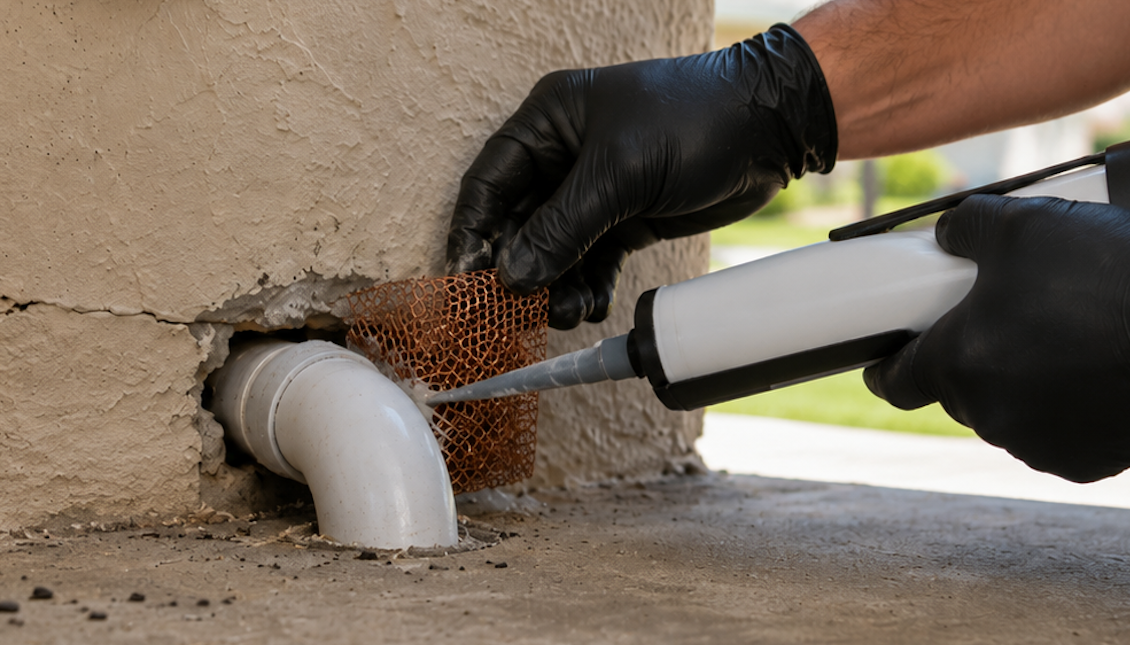
Professional mouse control in Cape Coral involves four steps: a full inspection, exclusion (sealing every entry point), trapping and removal, and sanitation of contaminated areas.
Of these, exclusion is the step that separates a lasting fix from a temporary one, and it is the step DIY almost always skips.
House mice are small enough to slip through a quarter-inch gap, and they breed fast in Cape Coral’s year-round warmth. Trapping alone rarely ends the problem, because new mice keep entering through openings that were never sealed.
This guide covers what professional treatment includes, how it differs from DIY, what results to expect, how to evaluate providers, and why ongoing protection lasts. For help now, Paske Pest Control offers Cape Coral Pest Control and professional Cape Coral rodent control.
Dealing with rats instead? This guide focuses on house mice. For roof rat, Norway rat, and attic rat problems, see the Cape Coral rat control service.
When Is It Time to Call a Professional for Mice in Cape Coral
It is time to call a professional when traps stop solving the problem, when droppings and activity spread to multiple areas, or when you find mice in the pantry or hear them in the walls. Each of these signals a population that DIY cannot eliminate without exclusion.
Traps Catch a Few but New Mice Keep Appearing
Snap traps catch only the mice that encounter them. New mice keep entering through the same quarter-inch gaps the originals used.
If you have been trapping for more than two weeks and still find fresh droppings, the population is being replenished faster than you can trap.
Droppings or Activity Have Spread to New Rooms
Mouse activity that started in the kitchen or garage and now appears in other rooms indicates a growing population.
A single female mouse can produce up to ten litters a year, so every month of delay usually means more mice.
You Hear Mice in the Walls or Find Nesting Material
Light scratching or scurrying inside walls, along with shredded paper, fabric, or insulation, means mice are nesting and breeding in the structure.
Nesting inside wall voids is beyond the reach of surface traps and requires professional treatment.
What a Professional Mouse Control Plan Should Include
A complete plan covers four areas: comprehensive inspection, exclusion of every entry point, trapping and removal, and sanitation of contaminated areas. The CDC guidance on rodent prevention and exclusion recommends the same framework for mice.
If a proposal skips exclusion or treats it as optional, the results will not last.
Comprehensive Inspection of Entry Points and Nest Sites
The inspection should cover the kitchen, laundry room, garage, wall voids, and storage areas where mice nest, as well as the exterior for entry points.
A good technician checks for low gaps around doors, pipes, utility lines, and foundation cracks, since mice enter close to the ground.
Exclusion: Sealing Every Entry Point Permanently
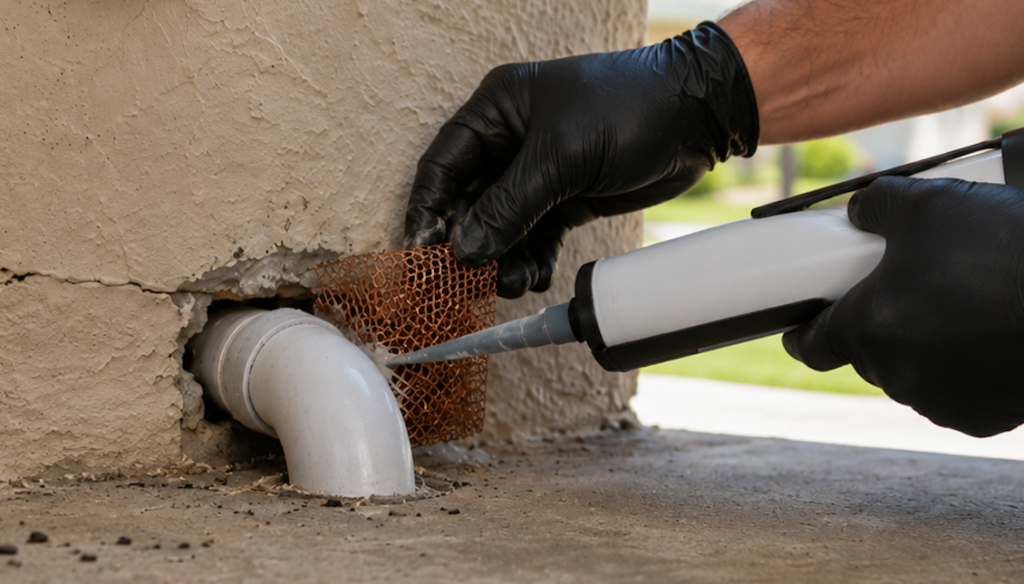
Exclusion is the step that ends the problem. Sealing openings with steel wool, copper mesh, hardware cloth, and sealant keeps new mice out after the current ones are removed.
Mice need only a quarter-inch gap, roughly the width of a pencil. A thorough exclusion job seals every opening that size or larger, not just the obvious ones.
Skipping exclusion is the single most common reason professional mouse control fails. Ask any provider how exclusion fits into their plan before signing.
Trapping and Removal of Active Mice
Once entry points are sealed, the focus shifts to removing the mice already inside. Strategic trap placement targets travel routes and nesting areas found during inspection.
Because mice forage within about 30 feet of their nest, trap placement near harborage matters. Trapping after exclusion works because new mice cannot replace the ones removed.
Sanitation and Decontamination
Mice leave droppings, urine, and nesting materials that contaminate surfaces and insulation and create health risks. A complete plan addresses this, not just the mice.
A good provider explains any cleanup or insulation assessment needed after the mice are gone.
How Professional Mouse Control Differs From DIY
The difference comes down to exclusion. DIY focuses on removing mice. Professional control eliminates them and prevents new ones from entering. The two approaches produce very different long-term results.
Exclusion Is the Step Most DIY Approaches Skip
Most homeowners set traps, place bait, and wait. They do not seal the quarter-inch gaps mice use around pipes, doors, and foundations.
Without sealing entry points, every removed mouse is replaced within days. Cape Coral’s rodent pressure makes this almost inevitable.
Strategic Trap Placement vs. Random Snap Traps
Professional trapping places devices along identified travel routes, near droppings, and at entry points, based on inspection findings rather than guesswork.
Since mice keep a tight foraging range, placing traps near the nest and travel paths is far more effective than scattering them randomly.
Why Rodenticides Alone Create New Problems
Rodenticides take several days to work, and affected mice often return to their nests to die inside walls or insulation.
Decomposition produces odors that last weeks. Professionals use rodenticides selectively, always paired with exclusion and monitoring.
What Results to Expect and How Quickly Treatment Works
Most Cape Coral homeowners notice a noticeable reduction in mouse activity within the first 1 to 2 weeks. Full resolution typically takes three to six weeks, including follow-up visits to confirm the population is gone and exclusion is holding.
Initial Reduction Within the First Two Weeks
Once exclusion is complete and trapping is underway, droppings and noise should decline noticeably within 7 to 14 days.
Be cautious of any provider who promises complete elimination after a single visit. Mice breed too quickly for that to be realistic without exclusion and follow-up.
Why Follow-Up Visits Confirm the Problem Is Resolved
Follow-up visits verify that traps are catching the remaining mice and that no new evidence is appearing.
They also catch any entry points the original inspection may have missed. Without follow-up, a provider cannot confirm the problem is truly resolved.
How to Evaluate a Mouse Control Provider Before Hiring
The best way to evaluate a provider is to ask specific questions during the estimate. The EPA guide to choosing a pest control company recommends verifying licensing and requesting written treatment details before signing.
Questions to Ask During the Estimate
1. Will the plan include exclusion (sealing entry points), or just trapping?
2. Will you seal gaps as small as a quarter inch, since that is all a mouse needs?
3. What materials do you use for exclusion? Steel wool, copper mesh, and hardware cloth, or just foam?
4. How many follow-up visits are included, and over what period?
5. Do you handle sanitation and decontamination, or do I need a separate provider?
6. What is your callback policy if mice return between visits?
7. Are you licensed under the Florida Structural Pest Control Act, Chapter 482, and can you provide your license information?
A provider whose answer to question one is anything other than “yes, exclusion is included” is offering mouse removal, not mouse control. They are not the same thing.
What a Good Treatment Proposal Should Include
A written proposal should specify the inspection scope, exclusion work, trapping strategy, number of follow-up visits, sanitation services, total cost, and any service guarantee.
Most professional methods rely on physical exclusion and tamper-resistant stations rather than free-fed rodenticides. Confirm pet and child safety with your provider before service.
Why Ongoing Protection Is the Only Long-Term Solution
One-time mouse control solves the current infestation. It does not address the constant pressure of new mice entering from neighboring properties, landscaping, and the broader Cape Coral environment. Ongoing monitoring prevents the next infestation.
Year-Round Climate Means Year-Round Mouse Pressure
Cape Coral has no winter freeze to reduce mouse populations. New mice are born and dispersing every month.
Even after successful treatment, the conditions that supported the original infestation remain in place. Ongoing monitoring catches new activity before it grows.
What a Recurring Pest Control Plan Covers
Most recurring plans include rodent monitoring, along with other common Cape Coral pests such as ants, roaches, and spiders. Paske Pest Control offers recurring pest control plans that include mouse inspection points under a single service agreement.
Recurring plans typically include free services if activity appears between visits.
How Ongoing Monitoring Catches New Activity Early
Scheduled visits check trap stations and the exclusion points sealed during the original treatment. Any new evidence is addressed before it becomes an infestation.
This is the difference between reacting to mice and preventing them. In Cape Coral’s climate, prevention is the only approach that produces consistent results.
How to Get Started With Mouse Control in Cape Coral
Start by scheduling an inspection with a licensed provider who includes exclusion in the plan and seals gaps as small as a quarter inch. Ask the questions listed above. Compare at least two proposals before signing.
Paske Pest Control provides Cape Coral rodent control with full inspections, permanent exclusion using steel wool, copper mesh, and hardware cloth, strategic trapping, sanitation, and follow-up visits to confirm resolution.
The longer a mouse infestation continues, the faster it grows and the more it contaminates. Professional treatment with exclusion is the most practical way to end the problem and keep it from returning.
FAQs
How much does professional mouse control cost in Cape Coral?
Cost varies based on the scope of exclusion, the size of the home, the extent of the infestation, and whether sanitation is required.
Most jobs include inspection, exclusion, trapping, and follow-up. Get at least two written estimates that break down each component, since cheaper proposals often skip exclusion or sanitation.
How long does professional mouse removal take to work?
Most homeowners see a noticeable reduction within 7 to 14 days. Full resolution typically takes three to six weeks, including follow-up visits.
Timelines vary based on the size of the infestation and how many entry points need to be sealed.
Will I have to leave my home during mouse treatment?
No. Mouse control does not require vacating the property. Most work happens at entry points, along walls, and in nesting areas.
Pets and family members can remain in the home throughout the process.
Are the products used safe for pets and children?
Most professional methods rely on physical exclusion and tamper-resistant trap stations rather than free-fed rodenticides.
Where rodenticides are used, they are placed in locked bait stations that pets and children cannot access. Confirm specifics with your provider.
Why do mice keep coming back after I trap them?
Trapping removes the mice you catch but does nothing about the quarter-inch gaps that let them in. New mice find those same openings within days.
Cape Coral’s year-round climate keeps mice active and breeding, so without exclusion, the population simply replaces itself. Sealing entry points is the only step that produces lasting results.
How often should mouse monitoring be done after the initial treatment?
Quarterly monitoring is typical for Cape Coral homes. Homes with heavy clutter, nearby fields, or a history of mice may benefit from bimonthly monitoring at first.
Recurring plans usually fold mouse monitoring into broader pest control, which is more cost-effective than rodent-only visits.
Can homeowner insurance help with mouse damage in Florida?
Generally, no. Most Florida policies classify rodent damage as a maintenance issue and do not cover repairs to insulation, wiring, or contaminated materials.
This is a key reason to address a mouse problem early and invest in monitoring. Treatment costs far less than repairs and cleanup after a large infestation.