
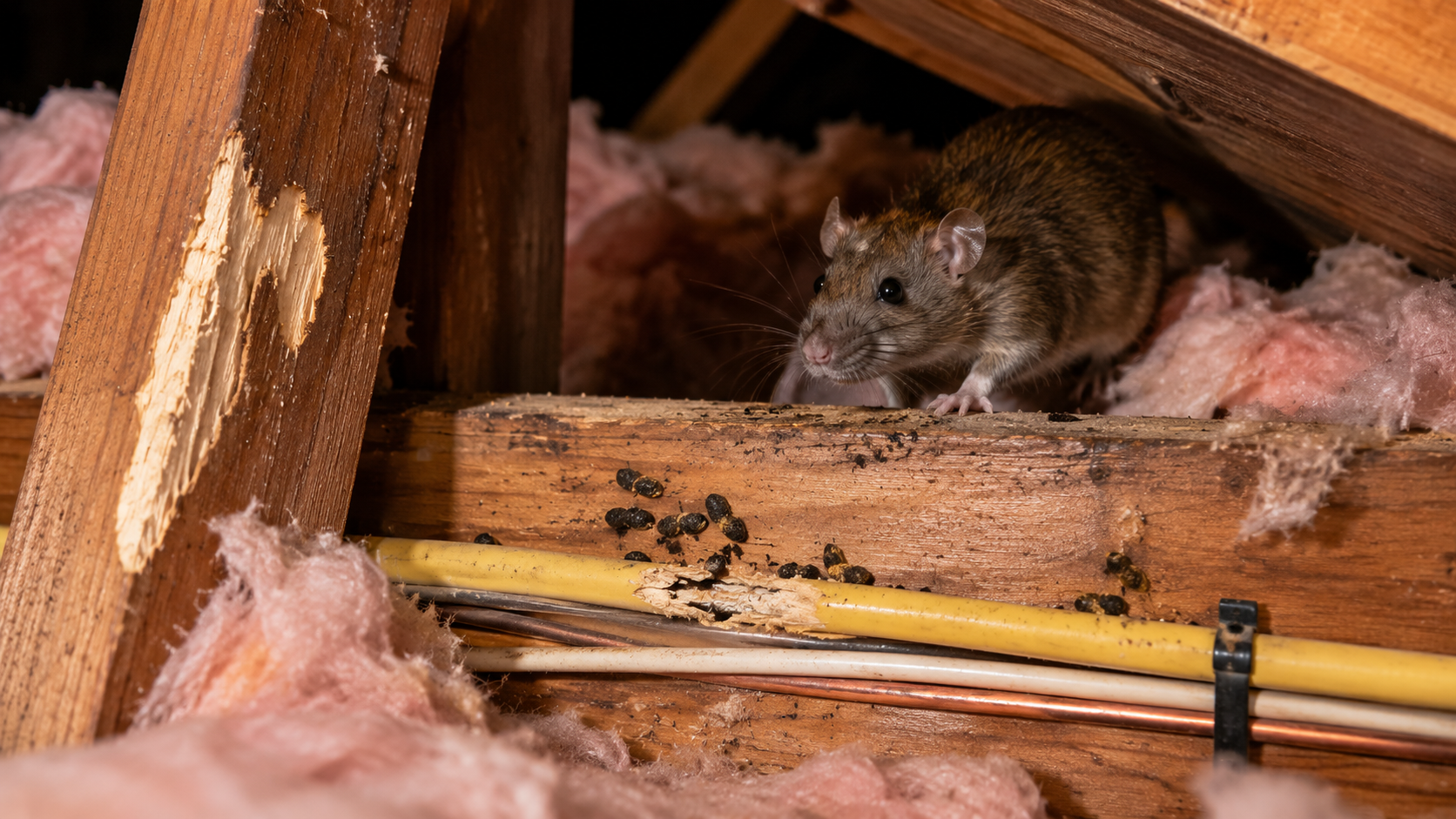
You likely have a rat problem in your Cape Coral home if you are finding droppings, hearing scratching in the attic at night, seeing gnaw marks on wood or wires, or noticing greasy rub marks along walls. Any one of these signals is enough to investigate. Two or more usually means an established population.
Most rat activity in Cape Coral is roof rats, the climbing species that nests in attics, soffits, and palm trees. Norway rats are less common and tend to operate at ground level.
This guide covers how to recognize the signs, identify the species, assess how serious the problem is, and decide whether to handle it yourself or call a professional. If you already know you need help, Paske Pest Control provides pest control in Cape Coral, including rodent inspections that start at the roofline.
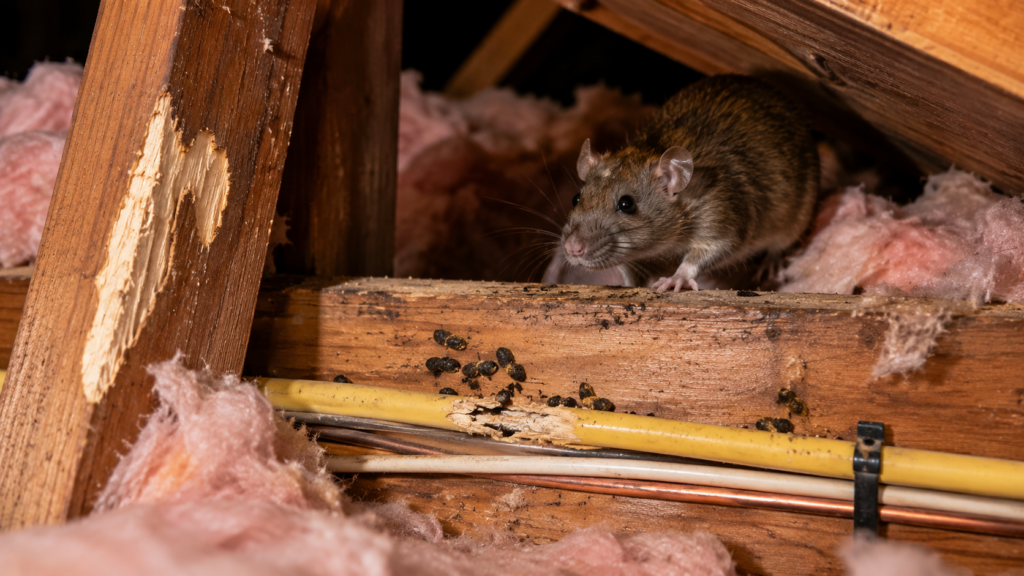
Early Signs of Rats in Your Cape Coral Home
The four most reliable early signs of rats are nighttime sounds in the attic, droppings in pantries or garages, gnaw marks on wood or food packaging, and greasy rub marks along walls. Each one tells you something different about where the rats are and how active they have been.
Scratching, Scurrying, and Thumping in the Attic at Night
Roof rats are nocturnal. Activity usually begins shortly after sunset and continues through the night.
If you hear scratching, scurrying, or occasional thumps overhead between dusk and dawn, the activity is almost certainly roof rats in the attic. Squirrels are diurnal and rarely cause nighttime noise, so timing is a useful tell.
Droppings in Pantries, Garages, and Along Walls
Rat droppings are dark, shiny, and roughly half an inch long. They are typically found along walls, in pantry corners, on garage shelves, in attic insulation, and behind appliances.
Fresh droppings are dark and moist. Older droppings dry to a dull gray. Finding both indicates ongoing activity rather than an isolated visit.
Gnaw Marks on Wood, Wires, and Food Packaging
Rats chew constantly because their incisors grow continuously. Gnaw marks appear on wood framing, electrical wires, plastic packaging, and even soft metals.
Fresh gnaw marks have a light, raw color. Older marks darken with age. Multiple sets of gnaw marks in different areas usually indicate more than one rat.
Greasy Rub Marks Along Walls and Beams
Rats follow the same paths repeatedly and leave behind dark, greasy smudges from oils in their fur. These rub marks appear along baseboards, beams, pipe penetrations, and edges of openings they use to travel.
Rub marks are one of the strongest indicators that an active travel route exists. They form over weeks of repeated use, not from a single visit.
How to Identify Which Rat Species You Have
In Cape Coral, the rat you are dealing with is almost certainly a roof rat. Roof rats are slim climbers that nest overhead. Norway rats are heavier, ground-level burrowers. The table below summarizes the key differences. For full species details, see the UF/IFAS guide to rat species in Florida.
Roof Rat vs. Norway Rat: Quick Identification
| Feature | Roof Rat | Norway Rat |
|---|---|---|
| Body shape | Slim, agile, 6 to 8 inches long (body) | Heavy, muscular, 7 to 10 inches long (body) |
| Tail | Longer than body, hairless | Shorter than body, thick |
| Snout | Pointed | Blunt |
| Droppings | Pointed ends, about 1/2 inch long | Blunt ends, about 3/4 inch long |
| Preferred nest location | Attics, soffits, palm trees, dense landscaping | Burrows under slabs, patios, sheds |
| Activity signs | Overhead noise, rub marks along beams, fruit damage | Ground-level burrows, dirt mounds, runways in grass |
| Common in Cape Coral? | Yes; the dominant species | Less common; possible at ground level |
Roof Rat Indicators: Attic Activity, Pointed Droppings, Climbing Signs
If your evidence is concentrated above ground level (attic noise, droppings on shelves, gnaw marks on roof framing or wiring), you are dealing with roof rats.
Other roof rat tells include damaged fruit in trees, droppings on top of fence rails, and worn paths along power lines or branches near the roof.
Norway Rat Indicators: Ground-Level Activity, Burrows, Blunt Droppings
Norway rat evidence appears at ground level. Look for burrow holes two to three inches wide near foundations, sheds, or AC pads.
Other signs include dirt mounds, worn paths through grass, and droppings with blunt ends in garages or storage areas.
Why Activity Patterns Matter More Than Sightings
Rats are nocturnal and avoid humans. Most homeowners never see the rats themselves. The evidence does the talking.
Where the evidence is concentrated (attic vs. ground) is usually the fastest way to identify the species without ever spotting a live rat.
How to Assess the Severity of a Rat Problem
Severity is measured by three factors: whether evidence appears in one location or multiple, how many entry points exist, and whether signs keep returning after cleanup. A single sighting in the garage is different from droppings in three rooms and scratching in the attic every night.
A Single Sighting vs. Evidence of an Established Colony
Spotting one rat outside the home, especially in a yard with fruit trees or near a canal, is not unusual in Cape Coral. It does not necessarily mean an infestation.
Finding droppings inside the home, hearing repeated nighttime activity, or seeing damage in multiple locations indicates an established population.
How Many Entry Points and Active Nest Sites Are Present
Roof rats often use more than one entry point. A single opening at the soffit may lead to multiple nesting areas across the attic.
If you find droppings or signs of activity in separate parts of the attic, garage, or interior walls, the population is likely larger than it would appear from any one spot.
Why Recurring Signs Mean the Population Is Reproducing
Rats reproduce quickly. A female roof rat can produce four to six litters per year, with five to eight pups per litter.
If you keep finding fresh droppings or gnaw marks after cleaning, the population is producing new individuals faster than you are removing them. This is the threshold where DIY methods reliably stop working.
Why DIY Rat Control Usually Fails in Cape Coral
DIY rat control fails for three predictable reasons: snap traps remove only a small fraction of the population, store-bought rodenticides often cause rats to die inside walls, and without sealing entry points, new rats simply replace the ones removed. The EPA guidance on rodenticide use and restrictions notes that improper use is a leading cause of poor results and unintended exposure to pets and wildlife.
Snap Traps Catch a Few Rats but Miss the Population
Snap traps work, but they only capture rats that encounter them. A small attic infestation can include a dozen or more rats, and traps catch only a few before others learn to avoid them.
Trap shyness develops within a few days. After two or three captures, the remaining rats steer clear.
Store-Bought Rodenticides Often Lead to Dead Rats in Walls
Rodenticides take several days to work. During that time, the affected rats often return to their nesting areas, which means they die inside wall voids or attic insulation.
Decomposition produces a strong odor that can last weeks and is difficult to locate. The dead rats also leave behind ectoparasites that can spread to other parts of the home.
Without Sealing Entry Points, New Rats Keep Coming In
This is the most important failure point. Killing the current rats does nothing about the gaps in your soffit, fascia, or foundation that let them in.
Cape Coral’s roof rat population is dense enough that any open entry point will be discovered by a new rat within days or weeks. Sealing entry points (called exclusion) is the only step that produces lasting results.
What a Professional Rat Inspection Should Reveal
A professional inspection should answer four questions: which species is present, where the rats are nesting, where all the entry points are located, and what conditions on the property are sustaining the activity. The CDC guidance on safe cleanup of rodent droppings also recommends professional involvement when contamination is significant.
Species Identification and Active Nest Locations
The technician should identify the species on-site based on droppings, evidence patterns, and access routes. For roof rats, that usually means attic and exterior inspection.
Nest locations matter because they determine where exclusion and trapping efforts focus.
Mapping All Entry Points, Including Roof and Ground-Level Access
This is the step that DIY almost always misses. A thorough inspection covers the entire roof line: soffits, fascia, vents, plumbing penetrations, the joints around chimneys and AC units, and gaps where tile meets flashing.
Ground-level inspection covers the foundation, garage door seals, weep holes, and any utility penetrations. Roof rats only need a half-inch gap to enter, and Norway rats can use slightly larger openings at ground level.
Conducive Conditions That Sustain Rat Activity
Palms touching the roof line, fruit trees with fallen fruit, bird feeders, outdoor pet food, and dense landscaping against the foundation all sustain rat populations.
A good inspection identifies these factors so the homeowner can make changes that reduce long-term pressure, not just current activity.
How to Decide Whether You Need Professional Rat Control
You can likely manage it yourself if the activity is limited to a single rat sighting outside, you have not found droppings inside, and there is no evidence of nesting. Anything beyond that calls for professional help.
You should call a professional if you are hearing scratching in the attic, finding droppings inside the home, seeing damage to insulation or wiring, or finding fresh signs after you have already tried traps. These all indicate an established population that DIY methods will not eliminate without exclusion.
For homeowners ready to schedule an inspection, Paske Pest Control provides rodent control in Cape Coral with full attic, exterior, and ground-level inspections.
If you would prefer ongoing monitoring rather than a one-time response, recurring pest control in Cape Coral covers rodent activity alongside other common Cape Coral pests under one service agreement.
FAQs
How can I tell if rat droppings are from a roof rat or a Norway rat?
Roof rat droppings are about half an inch long with pointed ends. Norway rat droppings are larger, around three-quarters of an inch, with blunt ends.
In Cape Coral, roof rat droppings are far more common because roof rats dominate the area. Location also helps: droppings in attics, on shelves, or above ground level usually indicate roof rats.
Does scratching in the attic always mean rats?
Not always, but in Cape Coral it usually does. Roof rats are by far the most common attic invader.
Other possibilities include squirrels (active during the day, not at night) and raccoons (much louder, with heavier movement). If the noise happens between dusk and dawn and sounds like quick scurrying or scratching, roof rats are the likely cause.
How long does it take to confirm whether I have an active rat problem?
Usually one to two days. Place a small amount of food (like peanut butter) in a likely activity area and check it for disturbance overnight.
Fresh droppings, gnaw marks, or disturbed food the next morning confirm active rats. Setting tracking strips of flour at suspected entry points can also reveal fresh footprints.
Are rat droppings dangerous to clean up myself?
Yes, if not handled properly. Droppings, urine, and nesting materials can carry diseases including leptospirosis and salmonella.
The CDC recommends ventilating the area, wearing gloves and a mask, dampening droppings with a disinfectant before removing them (never sweeping or vacuuming dry droppings), and disposing of materials in sealed bags.
How fast can a rat population grow in a Cape Coral attic?
Very fast. A female roof rat can produce four to six litters per year with five to eight pups per litter, and pups reach reproductive age in about three months.
In Cape Coral’s year-round warm climate, populations expand continuously. A small problem in spring can become a significant infestation by fall if left untreated.
Can I find rat entry points myself?
You can find some of them, but a thorough exclusion-grade inspection usually requires a professional. Roof rats use openings as small as half an inch, and many are in spots that are hard to inspect from the ground.
Common DIY-visible entry points include soffit gaps, damaged fascia, garage door corners, weep holes, and gaps around plumbing or AC line penetrations. Less visible points include vent screens, tile roof valleys, and the junctions where rooflines change pitch.
Will rats leave on their own if I remove food sources?
No. Removing food sources slows reproduction and reduces pressure, but established rats will not abandon a viable nesting site just because food is harder to find.
They will simply expand their foraging range or shift to neighboring properties for food while continuing to nest in your attic. Food source reduction is helpful but not sufficient on its own.