
You likely have a roach problem in your Cape Coral home if you are finding droppings, spotting egg cases, noticing a musty odor, or seeing live roaches during the day. Daytime sightings are the strongest signal, because roaches are nocturnal and only forage in daylight when the population is large.
The species matters more than the count. A single large palmetto bug is often a wanderer, while even one German cockroach usually means a breeding population indoors.
This guide covers how to recognize the signs, identify the species, assess severity, and decide whether to call a professional. If you already need help, Paske Pest Control offers Cape Coral Pest Control and targeted Cape Coral cockroach removal.
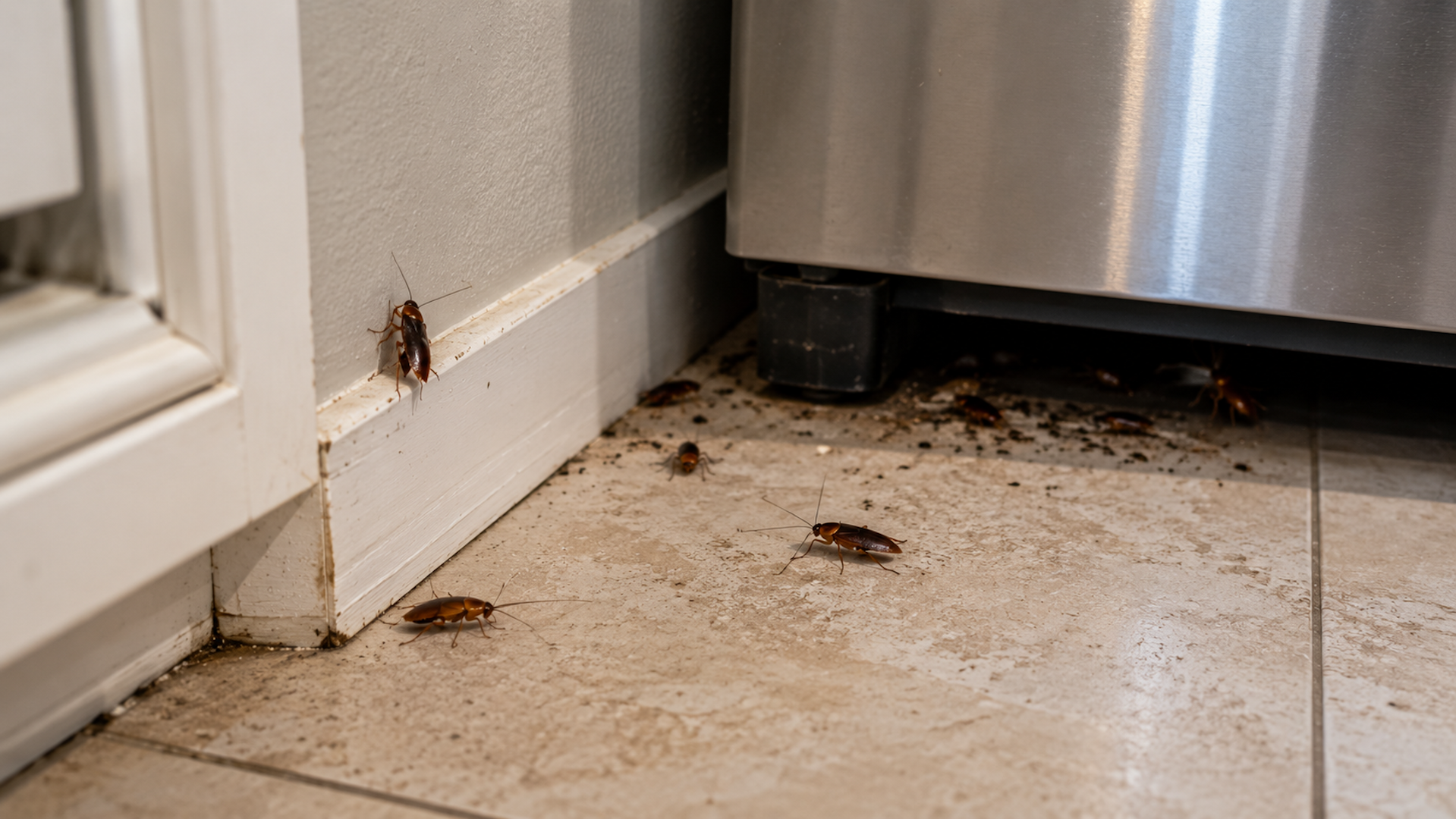
Early Signs of Cockroaches in Your Cape Coral Home
The four most reliable signs of a roach problem are droppings, egg cases, a musty odor, and live roaches seen during daylight. Each tells you something about the species and the size of the population.
Droppings That Look Like Pepper or Coffee Grounds
German cockroach droppings look like tiny specks of black pepper or coffee grounds, usually found in cabinets, drawers, and along countertops. Larger roaches leave blunt, ridged droppings that can resemble mouse droppings.
Droppings concentrated in one area often point to a nearby harborage or nest.
Egg Cases (Oothecae) in Hidden Corners
Cockroaches carry their eggs in capsules called oothecae. German cockroach cases are small and light brown. American cockroach cases are larger and dark reddish-brown.
Finding egg cases is a strong sign of breeding activity, not just stray roaches passing through.
A Musty, Oily Odor
A significant infestation produces a distinct musty or oily smell from the pheromones roaches release. The stronger the odor, the larger the population tends to be.
If you notice this smell in a kitchen or bathroom, the activity is likely well established.
Live Roaches During the Day
Roaches are nocturnal and avoid light. Seeing them in daylight usually means the population has grown large enough that they are competing for space and food.
Daytime sightings are one of the clearest indicators of a heavy infestation.
How to Identify Which Cockroach You Have
In Cape Coral, the two species that matter most are the American cockroach (the large palmetto bug) and the German cockroach (the small indoor breeder). Telling them apart determines how the problem should be handled. For detailed identification, see the UF Featured Creatures German cockroach profile.
American (Palmetto Bug) vs. German Cockroach
| Feature | American (Palmetto Bug) | German |
| Size | Large, 1.5 to 2 inches | Small, about 1/2 inch |
| Color | Reddish-brown, yellow figure-eight behind head | Light brown with two dark stripes behind head |
| Where it lives | Mostly outdoors; enters through drains and gaps | Indoors; kitchens and bathrooms |
| Droppings | Blunt, ridged, mouse-dropping size | Tiny specks like pepper or coffee grounds |
| Reproduction | Slower; fewer egg cases | Fastest of any roach; rapid infestation |
| A single sighting means | Often a wanderer from outside | Usually an established indoor population |
| Treatment focus | Seal entry points, treat outdoor harborage | Gel baits, sanitation, interior treatment |
American Cockroach and Palmetto Bug Indicators
If the roaches are large, reddish-brown, and showing up near drains, garages, or after heavy rain, they are American cockroaches or smokybrown cockroaches.
These are outdoor species. Their presence indoors usually points to entry points and outdoor harborage rather than indoor breeding.
German Cockroach Indicators
If the roaches are small, light brown with two stripes, and concentrated in the kitchen or bathroom, they are German cockroaches.
Look for pepper-like droppings in cabinets and drawers, small egg cases, and activity around appliances. These signs point to indoor breeding.
Why a Single Palmetto Bug Is Different From a German Roach Sighting
A single palmetto bug and a single German cockroach mean very different things. The palmetto bug is usually one insect that wandered in. The German cockroach is usually the visible tip of a hidden breeding population.
Palmetto bugs live and breed outdoors. They come inside individually, looking for moisture or escaping heat and rain.
German cockroaches live and breed indoors. By the time you see one in daylight, dozens or hundreds may be hidden in wall voids, appliance motors, and cabinet corners.
This is why the same response does not work for both. Sealing a gap stops palmetto bugs. It does nothing for a German population already inside.
How to Assess the Severity of a Roach Problem
Severity comes down to three factors: the species involved, whether you see roaches during the day, and where the activity is concentrated. A few palmetto bugs near a drain is minor. Daytime German cockroach activity in the kitchen is serious.
A Wanderer vs. an Established Population
One or two large roaches near entry points, especially after rain, usually indicates wanderers. Repeated indoor sightings, droppings, and egg cases indicate an established population.
The presence of egg cases is the dividing line. It means the roaches are breeding where you found them.
Daytime Activity Signals a Heavy Infestation
Because roaches avoid light, daytime sightings mean the population has outgrown its nighttime hiding spots.
If you are seeing German cockroaches during the day, the infestation is advanced and DIY methods are unlikely to resolve it.
Where You Find Them Matters
Roaches concentrated around appliances, under sinks, and in cabinets point to indoor breeding (German). Roaches near drains, garages, and exterior doors point to outdoor species entering (American, smokybrown).
Mapping where you see activity helps confirm the species and the source.
Why DIY Roach Control Usually Fails in Cape Coral
DIY roach control fails for three predictable reasons: foggers scatter German cockroaches instead of eliminating them, sprays miss the hidden harborage where roaches actually live, and most homeowners skip the sanitation step that starves the population. The EPA guidance on cockroach control emphasizes integrated methods over single-product fixes.
Bug Bombs and Foggers Scatter German Cockroaches
Foggers release a repellent mist that drives German cockroaches deeper into wall voids and cabinet interiors rather than killing the colony.
They also leave dead roaches inside the structure, where decaying bodies continue releasing allergens. Foggers often make German infestations worse, not better.
Sprays Miss the Harborage Where Roaches Live
Contact sprays kill the roaches they directly hit. They do not reach the cracks, voids, and appliance interiors where the population actually nests.
Surface spraying reduces visible roaches temporarily while the breeding population continues unaffected.
Without Sanitation, the Population Keeps Feeding
Roaches need food and moisture. Treatment without addressing crumbs, grease, standing water, and clutter leaves the population with everything it needs to rebound.
Professional control pairs treatment with sanitation guidance, which is the step most DIY efforts skip.
What a Professional Roach Inspection Should Reveal
A professional inspection should answer three questions: which species is present, where the roaches are harboring and breeding, and what conditions are sustaining them. Without these answers, treatment is guesswork.
Species Identification and Harborage Locations
The technician should identify the species on-site and locate harborage points: behind appliances, under sinks, in wall voids, and around plumbing.
For German cockroaches, finding the harborage is essential because that is where baiting must be focused.
Entry Points and Outdoor Harborage for Large Species
For American and smokybrown cockroaches, the inspection should map entry points, drains, and outdoor harborage like mulch and gutters.
Treating the outdoor source and sealing entry points is what stops large roaches from continuing to wander in.
Moisture and Sanitation Conditions That Sustain Roaches
Leaky plumbing, condensation, standing water, food residue, and clutter all sustain roach populations.
A good inspection identifies these so the homeowner can correct them alongside treatment, which produces longer-lasting results.
How to Decide Whether You Need Professional Roach Control
You can likely manage it yourself if the problem is a single large palmetto bug near a drain, you find no droppings or egg cases indoors, and sealing entry points stops the sightings.
You should call a professional if you are seeing German cockroaches, spotting roaches during the day, finding droppings or egg cases indoors, or noticing a musty odor. These all indicate an established population that DIY methods rarely eliminate.
For homeowners ready to act, Paske Pest Control provides Cape Coral cockroach removal with species identification and targeted treatment.
If you would prefer ongoing protection, recurring pest control plans cover roaches alongside other common Cape Coral pests under one service agreement.
FAQs
How can I tell German cockroach droppings from other roach droppings?
German cockroach droppings look like tiny specks of black pepper or ground coffee, often smeared along cabinet edges and countertops.
American and smokybrown cockroach droppings are larger, blunt, and ridged, sometimes mistaken for mouse droppings. Location helps too: pepper-like specks in kitchen cabinets almost always mean German cockroaches.
Why am I only seeing roaches at night?
That is normal. Cockroaches are nocturnal and avoid light, so nighttime activity alone does not indicate the size of the problem.
The concerning sign is the opposite: seeing them during the day. That usually means the population has grown large enough to force some roaches out of hiding in daylight.
Does one palmetto bug mean my house is infested?
Usually not. A single large palmetto bug is most often a wanderer that came in from outside through a drain or gap, especially during heat or rain.
Repeated sightings, droppings, or egg cases would suggest more than a wanderer. A single German cockroach, by contrast, is more likely to signal an infestation.
How fast does a German cockroach infestation grow?
Quickly. German cockroaches reproduce faster than any other roach species, and Cape Coral’s warm climate accelerates the cycle.
A small problem can become a major infestation within a few months, which is why early action matters.
Can I find where roaches are hiding myself?
You can find some harborage points, but German cockroaches hide in places that are hard to inspect: inside appliance motors, wall voids, and the backs of cabinets.
Common DIY-visible spots include under sinks, behind the refrigerator, and inside lower cabinets near plumbing. A professional inspection finds the harborage points that are not visible.
Why do roaches keep coming back after I spray?
Sprays kill the roaches they hit but miss the breeding population in hidden harborage. The survivors continue reproducing.
With German cockroaches, sprays can also cause the colony to scatter to new areas. Lasting control requires baiting the harborage and removing the food and moisture that sustain them.
Are roach problems worse in certain parts of a Cape Coral home?
Yes. German cockroaches concentrate in kitchens and bathrooms where food, warmth, and moisture are highest.
Large outdoor species are most common in garages, near drains, and around exterior doors. Bathrooms and kitchens with plumbing leaks are the highest-risk areas for any roach species.