Tick Control in Southwest Florida That Protects Your Family, Pets, and Yard Year-Round
Reduce tick populations on your property before a bite transmits a dangerous disease
Serving Sarasota, Charlotte, Lee, and Collier Counties
★★★★★ 4.8 Google Rating
970+ Reviews
🎖️ Veteran-Owned
👨👩👧👦 Family Operated
✔ 100% Guarantee
WHAT YOU GET
✔ Same-day service when you call before noon
✔ Full property inspection identifying tick habitats and high-risk zones
✔ Targeted yard treatment applied to vegetation, leaf litter, fence lines, and wooded edges
✔ Pet area treatment covering kennels, dog runs, and outdoor resting spots
✔ Family- and pet-safe treatment methods
✔ Ongoing seasonal applications to maintain protection year-round
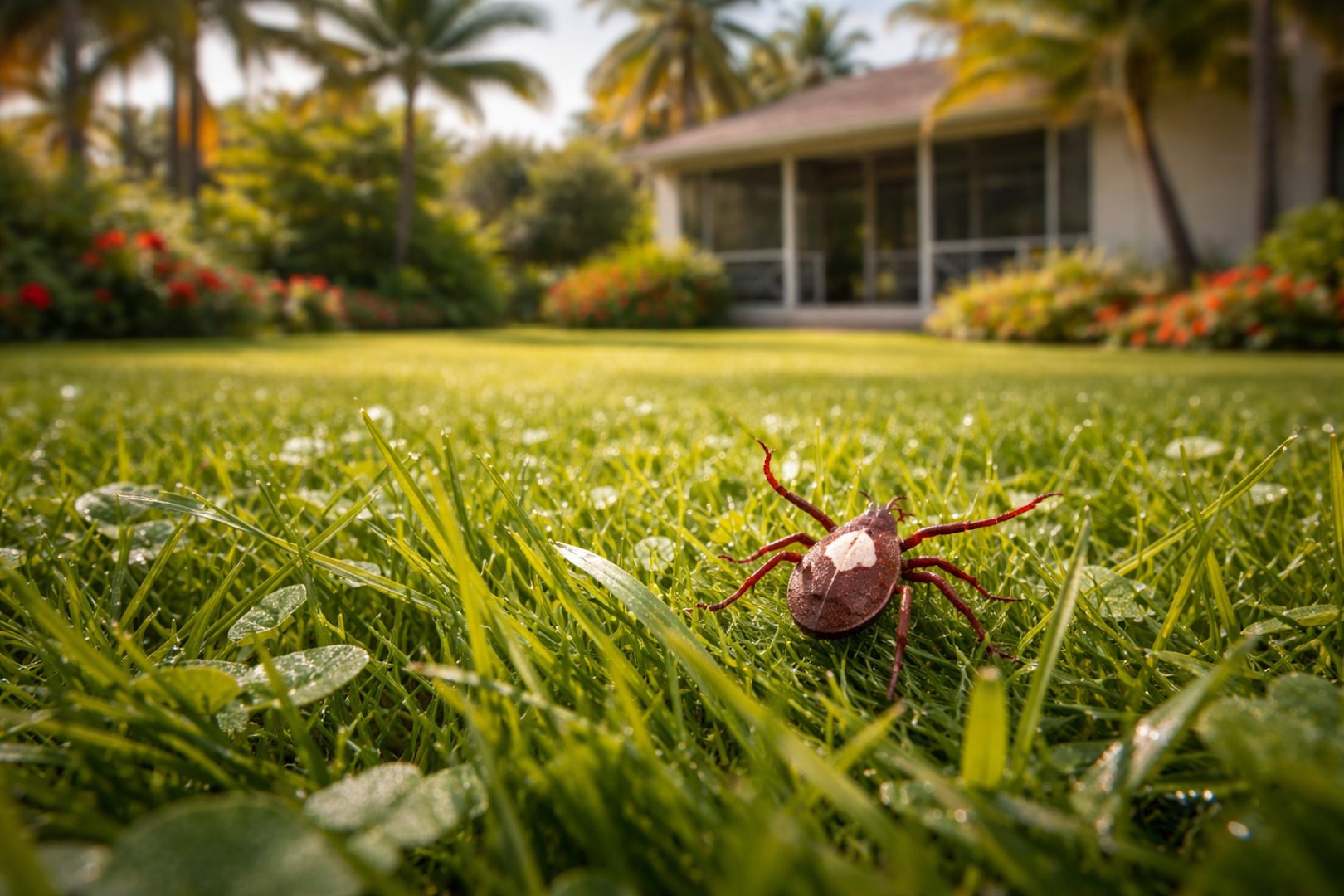
Ticks in Southwest Florida are active year-round. They wait on tall grass, leaf litter, and low vegetation for a host to brush past, then latch on and feed for hours or days.
A single bite can transmit Rocky Mountain spotted fever, ehrlichiosis, or Lyme disease. Lone star tick bites can trigger alpha-gal syndrome, a potentially life-threatening allergy to red meat.
Ticks do not respond to the same DIY treatments that work on other yard pests. Over-the-counter bug sprays applied to skin provide temporary personal protection but do nothing to reduce the tick population living in your yard, landscaping, and wooded edges.
From Cape Coral to Punta Garda to Naples and every near, professional tick control requires targeted yard treatment that eliminates ticks where they live and breed, combined with ongoing applications to maintain protection.
Ticks in Southwest Florida Carry Diseases That Affect Your Entire Household
Florida’s warm, humid climate keeps ticks active 12 months a year. There is no hard freeze to kill off populations. Peak activity runs from March through September, but adults of several species remain active through winter. Any property with trees, shrubs, tall grass, leaf litter, or wildlife corridors provides tick habitat within steps of your front door.
Lone star tick:
The most common human-biting tick in Florida. Lone star ticks are aggressive feeders found in dense undergrowth, along trails, and in residential yards. Nymphs are active from February through October. Adults peak from April through August. Lone star ticks transmit ehrlichiosis and southern tick-associated rash illness (STARI). Bites from this species are also the primary cause of alpha-gal syndrome, an allergy to red meat that can trigger life-threatening anaphylaxis.
Black-legged tick (deer tick):
Found in wooded and brushy areas across Southwest Florida. Nymphs are most active from April through August. Adults are active from September through May. Black-legged ticks transmit Lyme disease, the most reported tick-borne illness in Florida. Nymphs are small enough to go unnoticed for days, increasing the risk of disease transmission.
American dog tick:
Common throughout Southwest Florida from March through September. Adults attach to dogs and humans. This species is the primary transmitter of Rocky Mountain spotted fever (RMSF) in Florida, considered the most severe tick-borne disease in the country, with a high mortality rate in untreated cases. American dog tick bites can also cause tick paralysis in dogs and children.
Brown dog tick:
The only tick species in Florida that infests homes. Brown dog ticks complete their entire life cycle indoors, crawling into wall cracks and crevices between feedings. They prefer dogs as hosts but will bite humans. They transmit canine ehrlichiosis and have been identified as carriers of Rocky Mountain spotted fever. Once inside a home or kennel, they are extremely difficult to eliminate without professional treatment.
Gulf Coast tick:
Found in coastal areas and grasslands across Lee, Collier, Charlotte, and Sarasota counties. Gulf Coast ticks transmit Rickettsia parkeri, a relative of Rocky Mountain spotted fever that causes a sore or lesion at the bite site.
Reduce Tick Populations on Your Property and Lower the Risk of Tick-Borne Disease
Spraying personal repellent before going outside protects you temporarily. It does nothing about the ticks breeding in your yard. Professional tick control in Southwest Florida reduces the tick population on your property by combining three things.
Inspection:
Your licensed technician inspects the full property to identify tick habitats: tall grass, leaf litter, wooded edges, fence lines, brush piles, ornamental beds, and shaded areas where ticks quest for hosts. Pet areas including kennels, dog runs, and outdoor resting spots are assessed. If brown dog tick activity is suspected indoors, the home interior is inspected as well. You receive a documented report of all findings and a recommended treatment plan.
Treatment:
Your yard receives targeted treatment applied to vegetation, leaf litter, fence lines, property edges, and shaded harborage zones where ticks live and quest. Pet areas receive dedicated treatment. For brown dog tick infestations inside the home, interior crack-and-crevice treatment targets the wall voids and hiding spots where these ticks harbor between feedings. All products are selected to be effective against ticks while remaining safe for your family and pets.
Ongoing Protection:
A single treatment reduces the current population, but ticks are continuously reintroduced by wildlife moving through your property. Scheduled seasonal applications maintain a treated barrier across your yard and high-risk zones. Your technician adjusts treatment timing and coverage based on seasonal tick activity peaks and any changes to your landscaping or property.
Results You Can Expect
✓ Significant reduction in tick populations across your yard and landscaping
✓ Pet areas and outdoor living spaces treated and protected
✓ Brown dog tick infestations inside the home eliminated with targeted interior treatment
✓ Free re-treatment if tick activity persists between scheduled visits
Protect Your Family and Pets From Ticks in 4 Easy Steps
1
Tell Us What You’re Dealing With
Call or request service online. Describe where you or your pets have found ticks, whether anyone has been bitten, and whether you have dogs or outdoor pet areas on the property.
2
Same-Day Inspection When Available
Your licensed technician inspects the full yard, landscaping, wooded edges, pet areas, and the home interior if brown dog ticks are suspected. Tick habitats and high-risk zones are identified and documented. You receive a clear explanation of the findings and a recommended treatment plan before anything begins.
3
Targeted Yard and Property Treatment
Your property receives targeted treatment covering vegetation, leaf litter, property edges, fence lines, and pet areas. Interior treatment is applied if brown dog ticks are present inside the home. You receive photos and documentation of all treated areas.
4
Seasonal Ongoing Protection
Your technician returns on a scheduled basis to reapply treatments during peak tick seasons, adjust coverage based on property changes, and inspect for new tick activity. If ticks appear between visits, re-treatment is provided at no additional cost.
Why Paske Tick Control Works When Others Fail
Most pest companies treat the symptoms. We solve the problem.
✓ Inspection, targeted treatment, and ongoing seasonal protection handled together
✓ Species-specific knowledge of lone star, black-legged, American dog, brown dog, and Gulf Coast ticks
✓Yard treatment that targets ticks where they live, not just where you walk
✓Brown dog tick interior treatment for homes and kennels with indoor infestations
✓ Same-day service available
✓ Biologist on staff for properties with heavy wildlife pressure or recurring tick problems
✓ 30+ years of pest control experience in Southwest Florida
✓ 100% satisfaction guarantee
Tick Control Results Across Southwest Florida
★★★★★ 4.8 Average Rating
970+ Google Reviews
Veteran-Owned & Family Operated
★★★★★
Technician was super polite and courteous. As well he was informative with great purpose in his work. I am impressed and HIGHLY recommend this company.
Dave M.
★★★★★
We had rats in our attic for months. Paske came out same day, identified every entry point, and had the problem solved in under three weeks. Their monitoring gives us peace of mind.
Maria L.
★★★★★
Professional from start to finish. They documented everything with photos and explained exactly what they were doing. The exclusion work is solid and I haven’t had any issues since.
James T.
Tick Control Pricing
Complete Tick Protection Package
$49 initial service
✓ Includes full property inspection, targeted yard and pet area treatment, documentation, and ongoing seasonal applications.
✓ Custom pricing available for large properties, heavily wooded lots, properties with kennels, and homes with brown dog tick infestations requiring interior treatment.
Custom pricing available for large properties, commercial locations, or severe infestations.
SWFL Tick Pest Control FAQs
What tick species are found in Southwest Florida?
The five tick species most commonly encountered in Southwest Florida are the lone star tick, black-legged tick (deer tick), American dog tick, brown dog tick, and Gulf Coast tick. Each species has different seasonal peaks, host preferences, and disease risks. The lone star tick is the most common human-biting species in the region.
What diseases do ticks transmit in Florida?
Ticks in Florida transmit Rocky Mountain spotted fever (American dog tick), Lyme disease (black-legged tick), ehrlichiosis (lone star tick), southern tick-associated rash illness or STARI (lone star tick), and Rickettsia parkeri infection (Gulf Coast tick). Lone star tick bites are also the primary cause of alpha-gal syndrome, an allergy to red meat that can trigger severe allergic reactions. Ticks must feed for several hours to transmit disease, so prompt removal after outdoor activity reduces risk.
Are tick treatments safe for pets and children?
Yes. All products used are EPA-approved and applied to targeted outdoor zones where ticks live: vegetation, leaf litter, fence lines, and property edges. Your technician explains any temporary access restrictions, such as keeping pets and children off treated areas until dry, before treatment begins.
When are ticks most active in Southwest Florida?
Ticks are active year-round in Southwest Florida. Peak activity for most species runs from March through September. However, adult black-legged ticks are most active from September through May, and brown dog ticks remain active indoors regardless of season. Scheduled treatments are timed to match the seasonal activity patterns of the species present on your property.
My dog keeps getting ticks. Will yard treatment help?
Yes. Dogs pick up ticks from the yard, not from thin air. Treating the vegetation, leaf litter, and shaded areas where ticks wait for a host significantly reduces the number of ticks your dog encounters. Dedicated pet area treatment covers kennels, dog runs, and favorite outdoor resting spots. Combining professional yard treatment with veterinarian-recommended tick preventatives on your pet provides the strongest protection.
Can ticks live inside my house?
The brown dog tick is the only species in Florida that completes its entire life cycle indoors. These ticks crawl into wall cracks, baseboards, and crevices between feedings and can establish a breeding population inside your home or kennel. If brown dog ticks are found indoors, targeted interior treatment is required in addition to yard treatment. Other tick species may be carried inside on clothing or pets but do not establish indoor populations.
What if ticks come back after treatment?
If tick activity persists between scheduled visits, re-treatment is provided at no additional cost. That is the Paske guarantee. Ticks are continuously reintroduced by wildlife, so ongoing seasonal applications are the most effective way to maintain low tick populations on your property.
What is alpha-gal syndrome?
Alpha-gal syndrome is an allergic reaction to a sugar molecule found in red meat and other mammal products. It is triggered by lone star tick bites. Symptoms include hives, digestive problems, and in severe cases, anaphylaxis. The reaction typically occurs 3 to 6 hours after eating red meat. Alpha-gal syndrome cases are increasing in Florida. Reducing lone star tick exposure on your property is the only way to prevent it.
How can I reduce tick habitat on my property?
Keep grass mowed short. Remove leaf litter and brush piles. Trim vegetation along fence lines and property edges. Create a 3-foot barrier of gravel or wood chips between wooded areas and lawn. Stack firewood in dry areas away from the home. These steps reduce tick habitat and complement professional yard treatment.
Do I need ongoing tick treatment or is one application enough?
In Southwest Florida, a single treatment reduces the current tick population but does not prevent wildlife from reintroducing ticks to your property within weeks. Deer, raccoons, opossums, rodents, and feral cats carry ticks across property lines daily. Scheduled seasonal applications maintain a treated barrier that keeps tick populations suppressed year-round. One treatment helps. Ongoing protection is what keeps your family and pets safe.
Take the Next Step
Ready to Stop the Cycle?
Schedule service today. Call before noon for same-day availability across Sarasota, Charlotte, Lee, and Collier Counties.