Effective ant control in Cape Coral requires a three-step scientific approach: precise species identification, biology-based baiting, and proactive barrier monitoring.
In Southwest Florida’s tropical climate, universal baits and treatments fail because the treatment for a Ghost Ant infestation differs fundamentally from the protocol for Fire Ants or White-Footed Ants.
Furthermore, retail contact sprays only eliminate visible foragers. This often triggers budding, a survival mechanism where colonies like Pharaoh Ants split into multiple new nests, worsening the infestation.
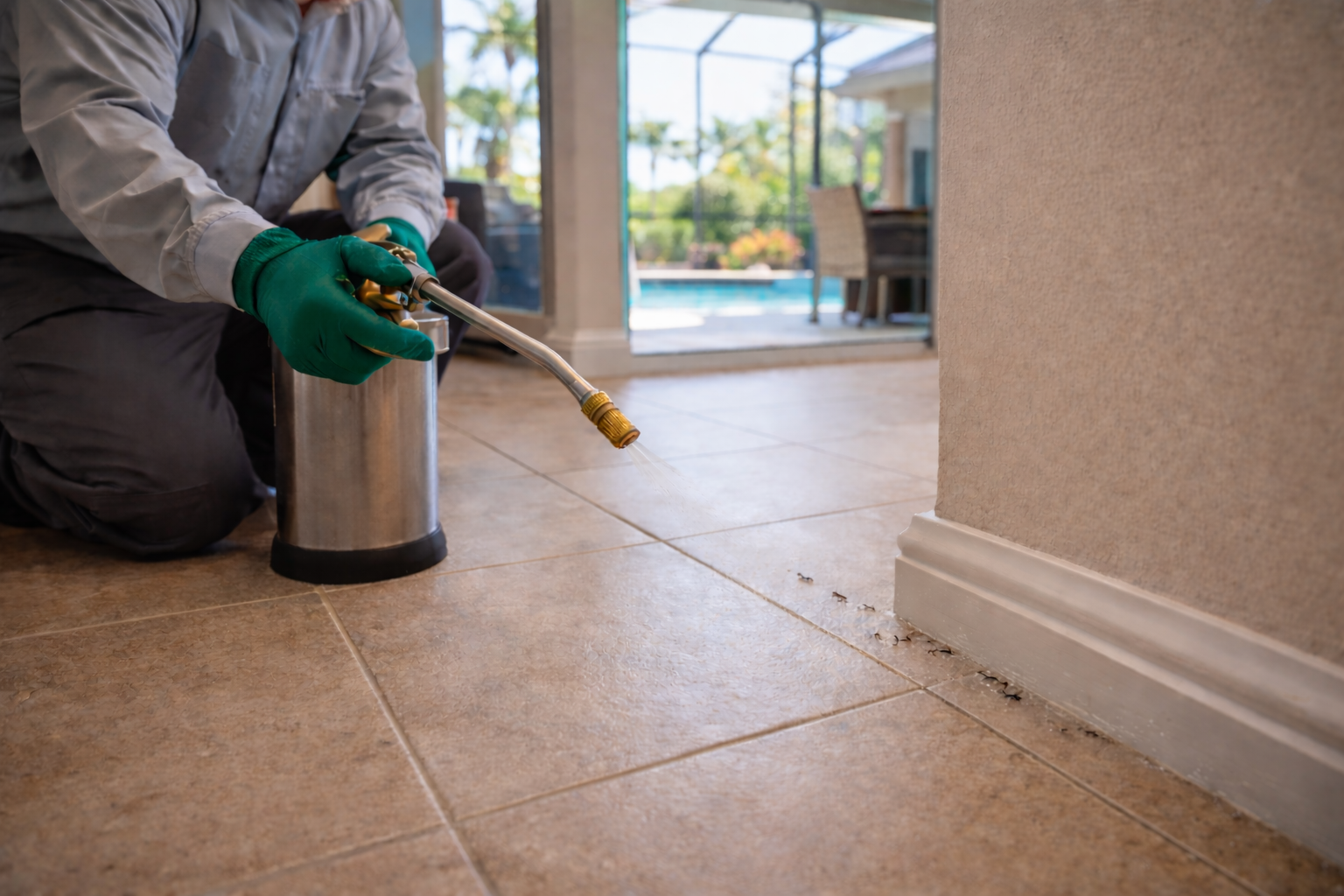
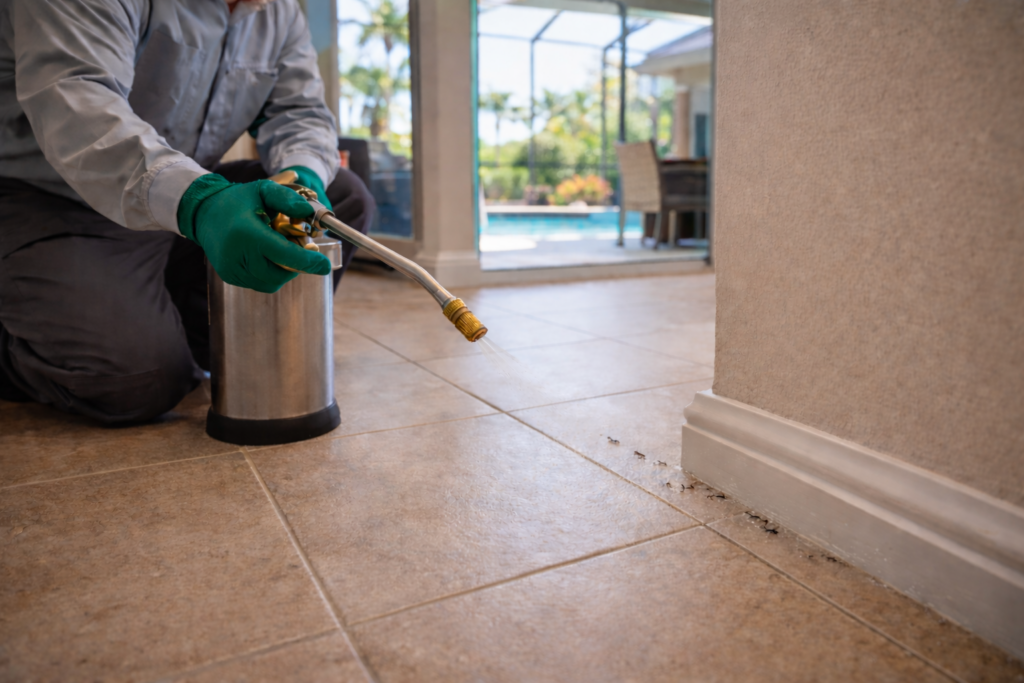
Professional Cape Coral Pest Control treatments use non-repellent transfer technology that workers carry back to the queen, neutralizing the colony at its source.
Common ants that require professional ant control in Cape Coral include:
- Carpenter Ants: Excavate galleries in wood to expand their nests, potentially compromising the structural integrity of internal framing and moisture-prone areas of your home.
- Ghost & Pharaoh Ants: Known for budding, these colonies split when threatened, rapidly spreading bacteria across kitchen surfaces, food prep areas, and bathrooms.
- Fire Ants: Aggressive mounds in lawns deliver painful, venomous stings that can trigger severe allergic reactions in humans and pets.
- White-Footed Ants: Their multi-queen, interconnected super-colonies can number in the millions, requiring professional-grade baits to prevent them from overwhelming the entire property perimeter.
An ongoing ant management plan includes a property inspection, sealing structural gaps, and moisture control.
This guide will help you decide when professional ant extermination is right for your situation.
When Is the Right Time to Call a Professional for Ants in Cape Coral?
Property owners in Southwest Florida should call an exterminator when DIT methods fail, persistent fire ants infest homes, and structural damage is observed.
- Failed DIY Treatments: Ants reappearing within 48–72 hours of retail treatment indicate the colony is largely unaffected and will continue to spread.
- Structural Damage (Carpenter Ants): Sightings of large black ants near windows, door casings, or eaves suggest wood-hollow excavation, which can lead to long-term structural integrity issues.
- Persistent Lawn Hazards (Fire Ants): Mounds that reappear immediately after rain indicate the queen is protected deep underground, requiring professional broadcast baiting.
- Multi-Point Infestations (Budding): If ants appear in new rooms after you spray, species like Ghost or Pharaoh ants have likely undergone budding, splitting into multiple satellite colonies with new queens.
While most ants don’t require immediate assistance on first contact, they are incredibly difficult to eliminate on their own and will not go away until the colony nest is eradicated.
What Does a Professional Ant Treatment Plan Include?
Effective, long-term control requires a strategic three-step approach: a detailed inspection to identify the ant species, targeted treatments designed for that species and its colony structure, and correction of the environmental conditions that allowed the infestation to develop.
Skipping any of these steps often results in recurring infestations and unnecessary callbacks.
1. Inspection and Species Identification
A qualified technician starts with an inspection to find the source of the colony.
Depending on the ant species you’re dealing with, different baiting techniques and sprays may need to be employed. Performing an inspection will help the exterminator determine the next steps to eradicate ant colonies.
2. Targeted Treatment Based on the Species and Colony Structure
Effective eradication moves beyond surface-level contact to target the heart of the infestation by utilizing specific formulations that account for the unique reproductive and foraging behaviors of Cape Coral’s most invasive ants.
Fire ants are treated with a combination of broadcast granular bait across the yard and direct mound treatments for visible mounds. Carpenter ants require locating the nest, which may be inside a wall void, and treating it directly.
3. Addressing Entry Points, Moisture Issues, and Conducive Conditions
Treatment alone is not enough if the conditions that attract ants remain. A good plan includes sealing entry points around the foundation, addressing moisture issues near the structure, trimming vegetation that touches exterior walls, and applying a perimeter treatment to create a barrier.
In Cape Coral, where humidity is constant and rain is frequent from May through October, moisture control is a critical part of any lasting ant management strategy.
How Professional Ant Treatments Work in Southwest Florida
Professional treatments work by getting the product into the colony to eliminate infestations from the inside out. This is done through non-repellent transfer products, species-matched baits, and perimeter barriers.
The UF/IFAS Florida 3-Step Program for ant control outlines a research-backed version of this approach: perimeter treatment, broadcast bait, and targeted bait working together.
Non-Repellent Products That Reach the Colony
Professional-grade non-repellent products are undetectable to ants. Workers walk through the treated area and carry the active ingredient back to the colony on their bodies, where it transfers to other ants through contact and grooming. This colony-transfer effect is what makes professional treatment fundamentally different from retail sprays.
Bait Systems for Ghost Ants, Pharaoh Ants, and Other Budding Species
Budding species are the most common ant problem inside Cape Coral homes. Ghost ants and pharaoh ants form sprawling colony networks with multiple queens. Gel and liquid baits placed near foraging trails allow workers to feed and carry the product back to every queen in the network. Colony collapse typically occurs 1 to 2 weeks after bait placement, depending on colony size.
Granular and Mound Treatments for Fire Ants
Fire ant control in Cape Coral yards uses a two-step process: first, broadcast granular bait is spread across the lawn to target colonies that have not yet built visible mounds; then, individual mounds are treated directly. This approach reduces overall fire ant populations across the property, not just the mounds you can see.
How Quickly Do Professional Ant Treatments Work?
Most Cape Coral homeowners see a significant reduction in ant activity within 48 hours, though complete colony elimination typically requires 1 to 4 weeks.
Non-repellent perimeter sprays work fastest, impacting foragers within days, while bait-based systems for Ghost and Pharaoh ants take longer because the product must be shared throughout the entire social network to reach the queen.
Fire ant populations generally collapse within two to four weeks following a professional broadcast baiting, whereas Carpenter ant timelines vary based on the accessibility of the internal nest.
How to Get Started With Ant Control in Cape Coral
The first step toward permanent colony elimination is scheduling an inspection with a licensed professional.
In Southwest Florida’s high-pressure environment, delays allow colonies to become more deeply established, increasing both the cost and complexity of removal.
To ensure you are receiving the best solution, look for these specific indicators during your estimate:
- Positive Species Identification: A qualified provider will identify the specific ant species before recommending a treatment; using the same product for Ghost Ants and Carpenter Ants is ineffective.
- Detailed Technical Proposals: Ensure your written estimate includes the identified species, the specific products used, a map of the treatment areas, and a clear satisfaction guarantee.
- Colony-Level Strategy: The plan should prioritize non-repellent transfer technology or species-matched baits rather than simple contact killers that cause colonies to scatter or bud.
- Environmental Remediation: A professional agreement should include exclusionary measures, such as sealing entry points and addressing the moisture issues common in Cape Coral.
- Recurring Protection Standards: Because of Florida’s year-round pest pressure, an effective plan must include scheduled follow-ups and a clear policy for free re-treatments if ants return between visits.
Paske Pest Control offers thorough inspections and biology-based treatment plans tailored to the unique challenges of Southwest Florida. Schedule an inspection today to request a professional evaluation and secure your property against seasonal infestations.
FAQs
How long does professional ant treatment take to work?
It depends on the species and method. Non-repellent perimeter treatments begin reducing forager activity within 24 to 48 hours. Bait-based treatments for ghost ants and pharaoh ants take one to two weeks for full colony collapse because workers need time to carry the product back to every queen in the network. Fire ant mound treatments show visible results in days, but broadcast bait across the yard takes two to four weeks to reduce the overall population.
Are professional ant treatments safe for pets and children?
Most professional-grade products used for ant control are formulated to be low-toxicity and safe for households with pets and children once the application has dried. Gel and liquid baits are placed in targeted, controlled locations. Ask your provider about the specific products they use, drying times, and any precautions recommended for the day of treatment.
Why do ants keep coming back after I spray?
Retail sprays are repellent-based. They kill ants on contact but scatter the colony to new locations. Species like ghost ants and pharaoh ants respond to disturbance by budding, meaning they split into multiple new colonies with new queens. Professional treatments use non-repellent products and slow-acting baits that workers carry back to the colony, eliminating it at the source rather than pushing it to a different part of the house.
Why is ant control more difficult in Cape Coral than in other regions?
Cape Coral’s constant humidity and sandy soil provide the ideal breeding ground for super-colonies. Furthermore, heavy rainfall from May through October can wash away DIY products within hours. Professional-grade barriers are specifically engineered to bond with surfaces and withstand the high moisture levels and UV exposure unique to Southwest Florida.
Do I need to leave my home during an ant treatment?
In most cases, no, you do not need to vacate your property. Since we utilize targeted baiting and low-volatility perimeter treatments rather than broad-cast fogging, the applications are localized to specific entry points and wall voids. We only ask that you keep pets and children away from treated liquid barriers until they are fully dry, which typically takes about 30–60 minutes in the Florida sun.